Description
Certification Name: Certificate in Port Operations Manager
Course Id: CPOM/Q0001.
Eligibility: Graduation or Equivalent.
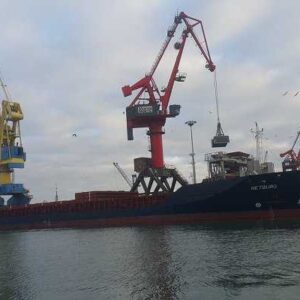
Objective: The Certified Port Operations Manager course is designed to equip participants with the strategic and operational knowledge required to oversee all facets of port activities. The course covers berth and terminal planning, vessel traffic management, cargo handling procedures (containers, bulk, and general cargo), port safety and security protocols (ISPS Code), equipment and workforce management, and environmental compliance (MARPOL).
Duration: Three Month.
 How to Enroll and Get Certified in Your Chosen Course:
 Step 1: Choose the course you wish to get certified in.
Step 2: Click on the “Enroll Now” button.
Step 3: Proceed with the enrollment process.
Step 4: Enter your billing details and continue to course fee payment.
Step 5: You will be redirected to the payment gateway. Pay the course and exam fee using one of the following methods:
Debit/Credit Card, Wallet, Paytm, Net Banking, UPI, or Google Pay.
Step 6: After successful payment, you will receive your study material login ID and password via email within 48 hours of fee payment.
Step 7: Once you complete the course, take the online examination.
Step 8: Upon passing the examination, you will receive:
• A soft copy (scanned) of your certificate via email within 7 days of examination.
• A hard copy (original with official seal and signature) sent to your address within 45 day of declaration of result.
Step 9: After certification, you will be offered job opportunities aligned with your area of interest.
Online Examination Detail:
Duration- 60 minutes.
No. of Questions- 30. (Multiple Choice Questions).
Maximum Marks- 100, Passing Marks- 40%.
There is no negative marking in this module.
| Marking System: | ||||||
| S.No. | No. of Questions | Marks Each Question | Total Marks | |||
| 1 | 10 | 5 | 50 | |||
| 2 | 5 | 4 | 20 | |||
| 3 | 5 | 3 | 15 | |||
| 4 | 5 | 2 | 10 | |||
| 5 | 5 | 1 | 5 | |||
| 30 | 100 | |||||
| How Students will be Graded: | ||||||
| S.No. | Marks | Grade | ||||
| 1 | 91-100 | O (Outstanding) | ||||
| 2 | 81-90 | A+ (Excellent) | ||||
| 3 | 71-80 | A (Very Good) | ||||
| 4 | 61-70 | B (Good) | ||||
| 5 | 51-60 | C (Average) | ||||
| 6 | 40-50 | P (Pass) | ||||
| 7 | 0-40 | F (Fail) | ||||
 Key Benefits of Certification- Earning a professional certification not only validates your skills but also enhances your employability. Here are the major benefits you gain:
 Practical, Job-Ready Skills – Our certifications are designed to equip you with real-world, hands-on skills that match current industry demands — helping you become employment-ready from day one.
 Lifetime Validity – Your certification is valid for a lifetime — no renewals or expirations. It serves as a permanent proof of your skills and training.
 Lifetime Certificate Verification – Employers and institutions can verify your certification anytime through a secure and reliable verification system — adding credibility to your qualifications.
 Industry-Aligned Certification –All certifications are developed in consultation with industry experts to ensure that what you learn is current, relevant, and aligned with market needs.
 Preferred by Employers – Candidates from ISO-certified institutes are often prioritized by recruiters due to their exposure to standardized, high-quality training.
 Free Job Assistance Based on Your Career Interests – Receive personalized job assistance and career guidance in your preferred domain, helping you land the right role faster.
Assessment Modules:
Module 1: Introduction to Port Operations and Management: Overview of port types and functions (cargo, container, bulk, passenger), Roles and responsibilities of a Port Operations Manager, Port infrastructure and layout planning, Key stakeholders: terminal operators, shipping lines, customs, and logistics service providers, Port operational flow: vessel arrival to cargo clearance, International maritime regulations impacting port operations (IMO, SOLAS, ISPS).
Module 2: Cargo Handling and Terminal Operations: Cargo types and handling techniques, Container terminal operations and yard management, Use of cranes, forklifts, conveyors, and automated systems, Coordination with stevedores, truckers, and rail operators, Bulk cargo handling and storage systems, Safety protocols and efficiency measures in cargo handling.
Module 3: Port Logistics and Supply Chain Integration: Multimodal transportation linkages and coordination, Warehousing, distribution, and cross-docking operations, Inventory and flow management in port logistics, IT systems and port community systems (PCS), Real-time cargo tracking and visibility tools, Interfacing with inland logistics hubs and free trade zones.
Module 4: Regulatory Compliance and Security Management: Customs clearance and port documentation, Compliance with international and national regulations (MARPOL, IMDG, ISPS Code), Dangerous goods handling and security procedures, Port health, safety, and environmental (HSE) requirements, Audit and inspection readiness, Emergency and contingency planning.
Module 5: Resource and Personnel Management: Workforce planning and shift management, Labor relations and union coordination, Training and upskilling port staff, Equipment maintenance and asset lifecycle planning, Budgeting and operational cost control, Leadership and communication in port operations.
Module 6: Strategic Development and Port Sustainability: Port development planning and expansion strategies, Smart ports and digitalization initiatives, Green port strategies and environmental management, Performance metrics and continuous improvement (Lean, Six Sigma), Public-private partnerships and investment planning, Capstone project: develop an operational improvement and sustainability strategy for a mid-sized international port.
Key Career Roles
Port Operations Manager
Leads terminal operations, berth planning, cargo handling, and workforce coordination.
Salary: ₹8 – 20 LPA | ₹25 – 50+ LPA (Senior Level)
Terminal Operations Manager
Manages container yards, crane operations, cargo movement, and turnaround time optimization.
Salary: ₹7 – 18 LPA | ₹20 – 45+ LPA
Berth Planning Officer
Coordinates vessel arrival schedules, berth allocation, and port call planning.
Salary: ₹6 – 15 LPA | ₹18 – 35+ LPA
Cargo Operations Superintendent
Supervises loading/unloading of bulk, breakbulk, and liquid cargo operations.
Salary: ₹6 – 16 LPA | ₹20 – 40+ LPA
Port Safety & Compliance Officer
Ensures compliance with maritime safety regulations, environmental norms, and operational standards.
Salary: ₹6 – 14 LPA | ₹18 – 30+ LPA
Employment Sectors
Graduates can work in:
-
Major Port Authorities
-
Private Container Terminal Operators
-
Bulk & Liquid Cargo Terminals
-
Maritime Logistics Companies
-
Offshore & Marine Infrastructure Firms
-
Shipping & Liner Companies
Major employment hubs in India include:
-
Jawaharlal Nehru Port
-
Mundra Port
-
Chennai Port
-
Kolkata Port
-
Cochin Port
Skills That Enhance Career Growth
-
Port Planning & Operations Strategy
-
Cargo Handling Equipment Management
-
Yard & Terminal Optimization
-
Berth Allocation & Vessel Scheduling
-
Maritime Safety & Environmental Compliance
-
Port KPI & Productivity Analysis
-
Workforce & Contractor Management
-
Digital Port & Automation Systems
Career Progression Path
Port Operations Executive
→ Assistant Port Manager
→ Port Operations Manager
→ Terminal Director
→ Chief Operating Officer – Port
→ Maritime Infrastructure Head
Entrepreneurial Opportunities
-
Port Operations Consultancy
-
Cargo Handling & Stevedoring Company
-
Marine Logistics & Terminal Advisory
-
Port Safety & Compliance Consultancy
-
Infrastructure & Port Development Advisory
Earning Potential in India
-
Entry Level: ₹5 – 10 LPA
-
Mid Level: ₹10 – 25 LPA
-
Senior Level: ₹25 – 60+ LPA
-
International Port Management Roles: ₹50 LPA – ₹1.5 Cr+ (depending on port scale & region)