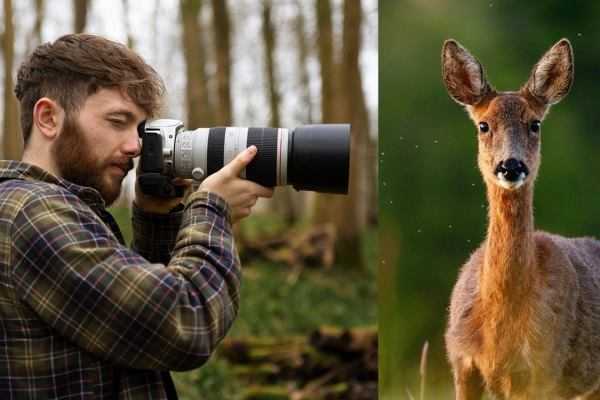
Description
Certification Name: Certificate in Wildlife Photographer
Course Id: CWP/Q0001.
Eligibility: 10th Grade or Equivalent.
Objective: The Certified Wildlife Photographer course aims to develop competent and responsible wildlife photographers by providing comprehensive training in camera handling, composition, field techniques, wildlife behavior, and ethical practices. The course focuses on fostering technical excellence, conservation awareness, and storytelling through imagery. Participants will learn how to work safely and respectfully in wild habitats, use professional-grade equipment, and produce impactful photographs that promote biodiversity conservation and environmental stewardship.
Duration: Three Month.
 How to Enroll and Get Certified in Your Chosen Course:
 Step 1: Choose the course you wish to get certified in.
Step 2: Click on the “Enroll Now” button.
Step 3: Proceed with the enrollment process.
Step 4: Enter your billing details and continue to course fee payment.
Step 5: You will be redirected to the payment gateway. Pay the course and exam fee using one of the following methods:
Debit/Credit Card, Wallet, Paytm, Net Banking, UPI, or Google Pay.
Step 6: After successful payment, you will receive your study material login ID and password via email within 48 hours of fee payment.
Step 7: Once you complete the course, take the online examination.
Step 8: Upon passing the examination, you will receive:
• A soft copy (scanned) of your certificate via email within 7 days of examination.
• A hard copy (original with official seal and signature) sent to your address within 45 day of declaration of result.
Step 9: After certification, you will be offered job opportunities aligned with your area of interest.
Online Examination Detail:
Duration- 60 minutes.
No. of Questions- 30. (Multiple Choice Questions).
Maximum Marks- 100, Passing Marks- 40%.
There is no negative marking in this module.
| Marking System: | ||||||
| S.No. | No. of Questions | Marks Each Question | Total Marks | |||
| 1 | 10 | 5 | 50 | |||
| 2 | 5 | 4 | 20 | |||
| 3 | 5 | 3 | 15 | |||
| 4 | 5 | 2 | 10 | |||
| 5 | 5 | 1 | 5 | |||
| 30 | 100 | |||||
| How Students will be Graded: | ||||||
| S.No. | Marks | Grade | ||||
| 1 | 91-100 | O (Outstanding) | ||||
| 2 | 81-90 | A+ (Excellent) | ||||
| 3 | 71-80 | A (Very Good) | ||||
| 4 | 61-70 | B (Good) | ||||
| 5 | 51-60 | C (Average) | ||||
| 6 | 40-50 | P (Pass) | ||||
| 7 | 0-40 | F (Fail) | ||||
 Key Benefits of Certification- Earning a professional certification not only validates your skills but also enhances your employability. Here are the major benefits you gain:
 Practical, Job-Ready Skills – Our certifications are designed to equip you with real-world, hands-on skills that match current industry demands — helping you become employment-ready from day one.
 Lifetime Validity – Your certification is valid for a lifetime — no renewals or expirations. It serves as a permanent proof of your skills and training.
 Lifetime Certificate Verification – Employers and institutions can verify your certification anytime through a secure and reliable verification system — adding credibility to your qualifications.
 Industry-Aligned Certification –All certifications are developed in consultation with industry experts to ensure that what you learn is current, relevant, and aligned with market needs.
 Preferred by Employers – Candidates from ISO-certified institutes are often prioritized by recruiters due to their exposure to standardized, high-quality training.
 Free Job Assistance Based on Your Career Interests – Receive personalized job assistance and career guidance in your preferred domain, helping you land the right role faster.
Assessment Modules:
Module 1: Introduction to Wildlife Photography: History and evolution of wildlife photography, Understanding the role of a wildlife photographer, Ethical considerations and conservation responsibility, Types of wildlife photography (macro, birds, mammals, underwater), Overview of global wildlife photography trends, Introduction to basic photography gear.
Module 2: Camera Gear and Technical Foundations: Understanding DSLR and mirrorless cameras, Choosing the right lens for wildlife photography, Settings: ISO, aperture, shutter speed, Autofocus systems and shooting modes, Use of tripods, monopods, and gimbals, Essential accessories (remotes, filters, memory cards).
Module 3: Field Techniques and Composition: Approaching wildlife safely and ethically, Tracking and anticipating animal behavior, Composition techniques specific to wildlife, Using light and natural elements creatively, Shooting in different environments (forest, savannah, wetlands), Importance of patience and timing.
Module 4: Post-Processing and Image Management: Introduction to Lightroom and Photoshop, RAW image workflow and color correction, Cropping and composition refinement, Noise reduction and sharpening techniques, Metadata, watermarking, and copyrighting, Archiving and backing up images.
Module 5: Wildlife and Ecology Knowledge: Animal behavior and habitat basics, Bird migration and seasonal patterns, Understanding ecosystems and food chains, Threatened species and conservation issues, Working with local guides and researchers, Building a field journal for species documentation.
Module 6: Career Development and Portfolio Building: Creating a professional wildlife portfolio, Social media and online presence strategies, Writing captions and stories for photojournalism, Participating in contests and exhibitions, Working with magazines and agencies, Legalities, permits, and safety protocols.
🎓 Certificate in Wildlife Photographer – Career Overview
After completing this certification, you can build a career in nature and wildlife magazines, tourism boards, documentaries, media houses, research organizations, stock photography platforms, and freelance projects across India and internationally. Wildlife photography focuses on capturing animals, birds, and natural habitats in their environment.
🔝 Career Options & Income Range (India)
-
Wildlife Photographer (Freelance / Professional) – ₹3,50,000 to ₹12,00,000+ per year
-
Nature / Conservation Photographer – ₹3,00,000 to ₹10,00,000 per year
-
Documentary Photographer – ₹4,00,000 to ₹12,00,000 per year
-
Stock Photography Contributor – ₹2,50,000 to ₹6,00,000 per year
-
Exhibition / Art Photographer – ₹4,00,000 to ₹12,00,000 per year
(Income depends on experience, assignments, publications, and licensing fees.)
🎯 Key Responsibilities
-
Capturing wildlife and natural landscapes in their habitat
-
Editing and post-processing images for publication or sale
-
Traveling to remote locations and following safety guidelines
-
Collaborating with media houses, magazines, and NGOs
-
Curating images for exhibitions, books, or digital platforms
📈 Career Growth Path
Assistant / Hobbyist → Freelance Wildlife Photographer → Professional Photographer → Documentary / Conservation Specialist → Studio / Expedition Organizer
Experienced professionals can work internationally, sell prints, publish books, collaborate with conservation projects, or run photography tours.
🧠 Skills That Increase Earning Potential
✔ Advanced camera techniques (DSLR / Mirrorless)
✔ Telephoto and wildlife lens expertise
✔ Photo editing (Lightroom, Photoshop)
✔ Drone photography for wildlife
✔ Travel planning, patience, and observation skills
✔ Portfolio building and social media promotion