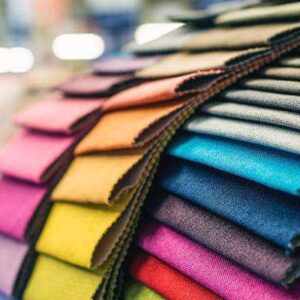
Description
Certification Name: Certificate in Textile Lab Technician
Course Id: CTLT/Q0001.
Eligibility: Graduation or Equivalent.
Objective: The Certified Textile Lab Technician course is designed to equip participants with the technical knowledge and hands-on skills necessary to perform a wide range of textile tests in a laboratory environment. The course covers physical, chemical, and performance testing of fibers, yarns, fabrics, and garments following international standards (e.g., ISO, ASTM, AATCC). Topics include colorfastness, tensile strength, abrasion resistance, pH testing, dimensional stability, and moisture content analysis.
Duration: Three Month.
 How to Enroll and Get Certified in Your Chosen Course:
 Step 1: Choose the course you wish to get certified in.
Step 2: Click on the “Enroll Now” button.
Step 3: Proceed with the enrollment process.
Step 4: Enter your billing details and continue to course fee payment.
Step 5: You will be redirected to the payment gateway. Pay the course and exam fee using one of the following methods:
Debit/Credit Card, Wallet, Paytm, Net Banking, UPI, or Google Pay.
Step 6: After successful payment, you will receive your study material login ID and password via email within 48 hours of fee payment.
Step 7: Once you complete the course, take the online examination.
Step 8: Upon passing the examination, you will receive:
• A soft copy (scanned) of your certificate via email within 7 days of examination.
• A hard copy (original with official seal and signature) sent to your address within 45 day of declaration of result.
Step 9: After certification, you will be offered job opportunities aligned with your area of interest.
Online Examination Detail:
Duration- 60 minutes.
No. of Questions- 30. (Multiple Choice Questions).
Maximum Marks- 100, Passing Marks- 40%.
There is no negative marking in this module.
| Marking System: | ||||||
| S.No. | No. of Questions | Marks Each Question | Total Marks | |||
| 1 | 10 | 5 | 50 | |||
| 2 | 5 | 4 | 20 | |||
| 3 | 5 | 3 | 15 | |||
| 4 | 5 | 2 | 10 | |||
| 5 | 5 | 1 | 5 | |||
| 30 | 100 | |||||
| How Students will be Graded: | ||||||
| S.No. | Marks | Grade | ||||
| 1 | 91-100 | O (Outstanding) | ||||
| 2 | 81-90 | A+ (Excellent) | ||||
| 3 | 71-80 | A (Very Good) | ||||
| 4 | 61-70 | B (Good) | ||||
| 5 | 51-60 | C (Average) | ||||
| 6 | 40-50 | P (Pass) | ||||
| 7 | 0-40 | F (Fail) | ||||
 Key Benefits of Certification- Earning a professional certification not only validates your skills but also enhances your employability. Here are the major benefits you gain:
 Practical, Job-Ready Skills – Our certifications are designed to equip you with real-world, hands-on skills that match current industry demands — helping you become employment-ready from day one.
 Lifetime Validity – Your certification is valid for a lifetime — no renewals or expirations. It serves as a permanent proof of your skills and training.
 Lifetime Certificate Verification – Employers and institutions can verify your certification anytime through a secure and reliable verification system — adding credibility to your qualifications.
 Industry-Aligned Certification –All certifications are developed in consultation with industry experts to ensure that what you learn is current, relevant, and aligned with market needs.
 Preferred by Employers – Candidates from ISO-certified institutes are often prioritized by recruiters due to their exposure to standardized, high-quality training.
 Free Job Assistance Based on Your Career Interests – Receive personalized job assistance and career guidance in your preferred domain, helping you land the right role faster.
Assessment Modules:
Module 1: Introduction to Textile Laboratory Techniques: Overview of Textile Lab Operations, Role and Responsibilities of a Textile Lab Technician, Key Laboratory Safety Practices and Protocols, Importance of Textile Testing in the Industry, Understanding Textile Standards and Regulatory Compliance (ISO, AATCC, ASTM), Types of Textile Testing (Physical, Chemical, Performance).
Module 2: Textile Materials and Testing Basics: Understanding Different Textile Materials (Fibers, Yarns, Fabrics), Key Properties of Textiles (Strength, Durability, Comfort, Aesthetics), Introduction to Fabric Construction and Its Impact on Testing, Common Defects and Issues in Textile Products, Overview of Common Testing Methods (Tensile, Abrasion, Shrinkage), Preparing Samples for Laboratory Testing.
Module 3: Testing Equipment and Instrumentation: Introduction to Textile Testing Instruments (Tensile Testing Machine, Abrasion Tester, Crockmeter, Pilling Tester), Calibration and Maintenance of Testing Equipment, Using Microscopes and Optical Instruments for Fiber Analysis, Overview of Automatic and Manual Testing Machines, Methods for Measuring Fabric Properties (Thickness, Density, Weight), Ensuring Accuracy and Consistency in Testing.
Module 4: Physical and Mechanical Testing of Textiles: Testing for Fabric Strength (Tensile, Tear, Bursting Strength), Methods for Abrasion Resistance Testing (Martindale, Taber), Measuring Fabric Stiffness, Flexural Rigidity, and Drape, Evaluating Shrinkage, Growth, and Dimensional Stability, Methods for Testing Fabric Hand and Softness, Assessing Fabric Durability (Pilling, Friction Resistance).
Module 5: Chemical Testing of Textiles: Introduction to Chemical Testing Methods (pH, Formaldehyde, Azo Dyes, Heavy Metals), Testing for Fabric Finishes (Water Repellency, Flame Retardancy, Anti-Microbial Treatments), Evaluating Color Fastness (Washing, Rubbing, Light), Analyzing Fiber Composition and Content (FTIR, Burn Test), Understanding Environmental and Safety Standards in Chemical Testing (OEKO-TEX, REACH), Testing for Residual Chemicals and Contaminants in Textiles.
Module 6: Data Analysis, Reporting, and Quality Control: Analyzing and Interpreting Lab Test Data, Using Statistical Tools for Test Results (Mean, Standard Deviation, Control Charts), Writing Detailed Test Reports and Certificates, Documenting and Archiving Test Results for Traceability, Communicating Findings to Production and Quality Control Teams, Ensuring Compliance with Industry Standards, Quality Control Practices in Textile Testing Labs, Emerging Trends in Textile Lab Technology and Automation.
career options and salary ranges in India after completing a Certificate in Textile Lab Technician course:
1. Textile Lab Technician / Executive
Role: Conduct tests and experiments on fibers, yarns, fabrics, and finished textiles to evaluate properties like strength, colorfastness, shrinkage, and other quality parameters; assist senior analysts in lab operations.
Salary Range: ₹3.5 LPA – ₹6.5 LPA (entry-level), ₹6.5 LPA – ₹12 LPA (experienced/senior level)
2. Fabric & Yarn Testing Technician
Role: Perform physical, chemical, and mechanical tests on fabrics and yarns; maintain accurate records and ensure compliance with quality standards.
Salary Range: ₹4 LPA – ₹7 LPA
3. Quality Control / Assurance Executive – Textile
Role: Inspect materials and final products, analyze test results, identify defects, and recommend corrective actions to production teams.
Salary Range: ₹4 LPA – ₹7.5 LPA
4. R&D Support Technician – Textile Lab
Role: Assist research and development teams in testing new fibers, yarns, and fabrics; provide data for product innovation and improvement.
Salary Range: ₹4.5 LPA – ₹8 LPA
5. ERP / PLM Lab Data Executive
Role: Record lab test results, maintain quality records, and integrate data into ERP or PLM systems for production and quality management.
Salary Range: ₹5 LPA – ₹9 LPA
6. Freelance / Independent Textile Lab Consultant
Role: Offer lab testing, quality assessment, and consultancy services for textile manufacturers, exporters, and fashion brands.
Earnings: ₹6 LPA – ₹18 LPA+ depending on expertise and client base
Experience-Based Salary Growth
| Experience Level | Salary Range (INR/Year) |
|---|---|
| Entry (0–2 yrs) | ₹3.5 L – ₹5.5 L |
| Mid (3–5 yrs) | ₹5.5 L – ₹10 L |
| Senior (5+ yrs) | ₹10 L – ₹18 L+ |
Top Employers in India
-
Textile and apparel manufacturing units
-
Fiber and yarn mills
-
Testing and quality assurance laboratories
-
Technical textile companies
-
R&D and innovation centers in textiles
Higher Career Growth Paths
-
Senior Textile Lab Technician / Lab Manager
-
Head of Quality & Testing – Textile & Apparel
-
Director – Textile R&D & Lab Operations
-
Independent Textile Lab Consultant
Salary Potential at Senior Levels: ₹12 LPA – ₹30 LPA+