
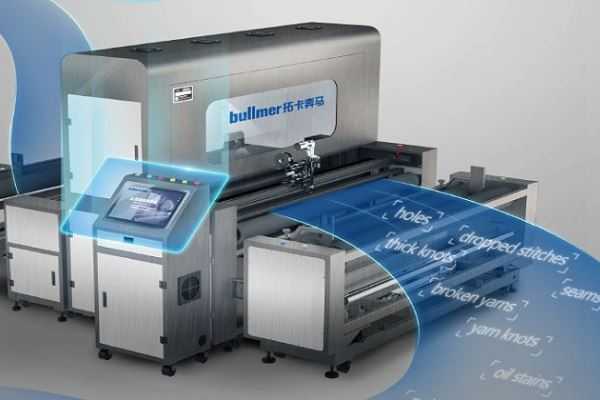
Description
Certification Name: Certificate in Fabric Defect Identifier
Course Id: CFDI/Q0001.
Eligibility: Graduation or Equivalent.
Objective: The Certified Fabric Defect Identifier course is designed to provide in-depth knowledge and hands-on skills for identifying, classifying, and reporting defects in woven, knitted, and nonwoven fabrics. The course covers fabric inspection methods, types and causes of defects (such as weaving faults, dyeing issues, and printing errors), defect grading systems (e.g., 4-point, 10-point systems), and industry quality standards.
Duration: Three Month.
 How to Enroll and Get Certified in Your Chosen Course:
Step 1: Choose the course you wish to get certified in.
Step 2: Click on the “Enroll Now” button.
Step 3: Proceed with the enrollment process.
Step 4: Enter your billing details and continue to course fee payment.
Step 5: You will be redirected to the payment gateway. Pay the course and exam fee using one of the following methods:
Debit/Credit Card, Wallet, Paytm, Net Banking, UPI, or Google Pay.
Step 6: After successful payment, you will receive your study material login ID and password via email within 48 hours of fee payment.
Step 7: Once you complete the course, take the online examination.
Step 8: Upon passing the examination, you will receive:
• A soft copy (scanned) of your certificate via email within 7 days of examination.
• A hard copy (original with official seal and signature) sent to your address within 45 day of declaration of result.
Step 9: After certification, you will be offered job opportunities aligned with your area of interest.
Online Examination Detail:
Duration- 60 minutes.
No. of Questions- 30. (Multiple Choice Questions).
Maximum Marks- 100, Passing Marks- 40%.
There is no negative marking in this module.
| Marking System: | ||||||
| S.No. | No. of Questions | Marks Each Question | Total Marks | |||
| 1 | 10 | 5 | 50 | |||
| 2 | 5 | 4 | 20 | |||
| 3 | 5 | 3 | 15 | |||
| 4 | 5 | 2 | 10 | |||
| 5 | 5 | 1 | 5 | |||
| 30 | 100 | |||||
| How Students will be Graded: | ||||||
| S.No. | Marks | Grade | ||||
| 1 | 91-100 | O (Outstanding) | ||||
| 2 | 81-90 | A+ (Excellent) | ||||
| 3 | 71-80 | A (Very Good) | ||||
| 4 | 61-70 | B (Good) | ||||
| 5 | 51-60 | C (Average) | ||||
| 6 | 40-50 | P (Pass) | ||||
| 7 | 0-40 | F (Fail) | ||||
Key Benefits of Certification- Earning a professional certification not only validates your skills but also enhances your employability. Here are the major benefits you gain:
Practical, Job-Ready Skills – Our certifications are designed to equip you with real-world, hands-on skills that match current industry demands — helping you become employment-ready from day one.
Lifetime Validity – Your certification is valid for a lifetime — no renewals or expirations. It serves as a permanent proof of your skills and training.
Lifetime Certificate Verification – Employers and institutions can verify your certification anytime through a secure and reliable verification system — adding credibility to your qualifications.
Industry-Aligned Certification –All certifications are developed in consultation with industry experts to ensure that what you learn is current, relevant, and aligned with market needs.
Preferred by Employers – Candidates from ISO-certified institutes are often prioritized by recruiters due to their exposure to standardized, high-quality training.
Free Job Assistance Based on Your Career Interests – Receive personalized job assistance and career guidance in your preferred domain, helping you land the right role faster.
Assessment Modules:
Module 1: Introduction to Fabric Defect Identification: Overview of Fabric Defects, Importance of Defect Identification in the Textile Industry, Types of Fabric Defects (Surface, Structural, and Color), Key Roles and Responsibilities of a Fabric Defect Identifier, Understanding Fabric Quality Standards, Common Causes of Fabric Defects.
Module 2: Types of Fabric Defects: Surface Defects (Stains, Dirt, Oil, Pilling, Snags), Structural Defects (Warp and Weft Irregularities, Yarn Breakage, Holes, Slubs), Color Defects (Uneven Dyeing, Fading, Streaks, Spots), Defects Caused by Weaving, Knitting, and Finishing, Defects Related to Fabric Stretch and Shrinkage, Other Defects (Off-grain, Twisting, Skewing).
Module 3: Fabric Inspection Methods and Tools: Visual Inspection Techniques for Fabric Defect Detection, Tools for Fabric Defect Identification (Magnifying Glass, Light Tables, Calipers), Automated Fabric Inspection Systems, Spotting and Classifying Defects by Size and Severity, Creating Defect Detection Standards and Procedures, Handling and Reporting Fabric Defects during Inspection.
Module 4: Defect Classification and Reporting: Classifying Fabric Defects Based on Severity and Type, Recording and Documenting Defects in Inspection Reports, Using Quality Control Charts and Defect Databases, Identifying and Tracking Defect Trends, Root Cause Analysis of Fabric Defects, Communicating Defect Information to Production Teams.
Module 5: Defect Prevention and Correction: Preventing Fabric Defects in the Weaving, Knitting, and Dyeing Processes, Analyzing and Identifying Common Causes of Defects, Implementing Corrective Actions for Defective Fabrics, Developing Preventive Maintenance Programs for Equipment, Process Optimization for Minimizing Defects, Role of Defect Identifier in Continuous Quality Improvement.
Module 6: Advanced Defect Detection and Sustainable Practices: Advanced Techniques for Fabric Defect Detection (Image Processing, Machine Vision), Role of Artificial Intelligence in Fabric Defect Identification, Sustainable Practices for Reducing Fabric Waste, Recycling Defective Fabrics, Improving Production Processes for Better Fabric Quality, Future Trends in Fabric Defect Identification and Textile Quality Control.
career options and salary ranges in India after completing a Certificate in Fabric Defect Identifier course:
1. Fabric Defect Identifier / Textile Quality Analyst
Role: Identify and document fabric defects such as weaving faults, knitting issues, dyeing inconsistencies, printing errors, and finishing flaws; report findings to production and quality teams.
Salary Range: ₹3.5 LPA – ₹6.5 LPA (entry-level), ₹6.5 LPA – ₹12 LPA (experienced/senior level)
2. Quality Control Executive – Fabric
Role: Inspect fabrics at various stages of production, maintain defect records, and ensure compliance with industry and buyer standards.
Salary Range: ₹3.5 LPA – ₹7 LPA
3. Fabric Inspection Coordinator
Role: Conduct detailed visual and instrument-assisted inspections, maintain inspection reports, and ensure quality metrics are achieved.
Salary Range: ₹4 LPA – ₹7.5 LPA
4. ERP / Quality Management System Executive
Role: Record fabric defects, track trends, and generate reports using ERP or Quality Management Systems to reduce defects in production.
Salary Range: ₹4.5 LPA – ₹8 LPA
5. Process Improvement Executive – Fabric
Role: Analyze recurring defects, propose corrective actions, and coordinate with production teams to improve fabric quality and reduce wastage.
Salary Range: ₹4.5 LPA – ₹8.5 LPA
6. Freelance / Independent Fabric Quality Consultant
Role: Provide consultancy services to textile manufacturers, fashion brands, and exporters for defect identification, quality improvement, and compliance.
Earnings: ₹6 LPA – ₹18 LPA+ depending on expertise and client base
Experience-Based Salary Growth
| Experience Level | Salary Range (INR/Year) |
|---|---|
| Entry (0–2 yrs) | ₹3.5 L – ₹5.5 L |
| Mid (3–5 yrs) | ₹5.5 L – ₹10 L |
| Senior (5+ yrs) | ₹10 L – ₹18 L+ |
Top Employers in India
-
Textile mills and apparel manufacturing units
-
Fashion and home textile brands
-
Export houses and quality testing laboratories
-
Technical textile companies
-
E-commerce and retail fashion brands requiring quality control
Higher Career Growth Paths
-
Senior Fabric Quality Analyst / QA Manager
-
Head of Quality Control – Textile & Apparel
-
Director – QA & Compliance in Textile Industry
-
Independent Fabric & Textile Quality Consultant
Salary Potential at Senior Levels: ₹12 LPA – ₹30 LPA+
