Description
Certification Name: Certificate in DevOps Master (Agile focus)
Course Id: CDOM/Q0001.
Eligibility: Graduation or Equivalent.
Objective: The Certified DevOps Master (Agile Focus) course is designed to equip professionals with a deep understanding of DevOps principles, tools, and practices, with a strong emphasis on Agile methodologies. The course aims to enable participants to streamline development and operations, enhance collaboration, improve delivery speed, and ensure continuous integration, testing, and deployment.
Duration: Three Month.
 How to Enroll and Get Certified in Your Chosen Course:
 Step 1: Choose the course you wish to get certified in.
Step 2: Click on the “Enroll Now” button.
Step 3: Proceed with the enrollment process.
Step 4: Enter your billing details and continue to course fee payment.
Step 5: You will be redirected to the payment gateway. Pay the course and exam fee using one of the following methods:
Debit/Credit Card, Wallet, Paytm, Net Banking, UPI, or Google Pay.
Step 6: After successful payment, you will receive your study material login ID and password via email within 48 hours of fee payment.
Step 7: Once you complete the course, take the online examination.
Step 8: Upon passing the examination, you will receive:
• A soft copy (scanned) of your certificate via email within 7 days of examination.
• A hard copy (original with official seal and signature) sent to your address within 45 day of declaration of result.
Step 9: After certification, you will be offered job opportunities aligned with your area of interest.
Online Examination Detail:
Duration- 60 minutes.
No. of Questions- 30. (Multiple Choice Questions).
Maximum Marks- 100, Passing Marks- 40%.
There is no negative marking in this module.
| Marking System: | ||||||
| S.No. | No. of Questions | Marks Each Question | Total Marks | |||
| 1 | 10 | 5 | 50 | |||
| 2 | 5 | 4 | 20 | |||
| 3 | 5 | 3 | 15 | |||
| 4 | 5 | 2 | 10 | |||
| 5 | 5 | 1 | 5 | |||
| 30 | 100 | |||||
| How Students will be Graded: | ||||||
| S.No. | Marks | Grade | ||||
| 1 | 91-100 | O (Outstanding) | ||||
| 2 | 81-90 | A+ (Excellent) | ||||
| 3 | 71-80 | A (Very Good) | ||||
| 4 | 61-70 | B (Good) | ||||
| 5 | 51-60 | C (Average) | ||||
| 6 | 40-50 | P (Pass) | ||||
| 7 | 0-40 | F (Fail) | ||||
 Key Benefits of Certification- Earning a professional certification not only validates your skills but also enhances your employability. Here are the major benefits you gain:
 Practical, Job-Ready Skills – Our certifications are designed to equip you with real-world, hands-on skills that match current industry demands — helping you become employment-ready from day one.
 Lifetime Validity – Your certification is valid for a lifetime — no renewals or expirations. It serves as a permanent proof of your skills and training.
 Lifetime Certificate Verification – Employers and institutions can verify your certification anytime through a secure and reliable verification system — adding credibility to your qualifications.
 Industry-Aligned Certification –All certifications are developed in consultation with industry experts to ensure that what you learn is current, relevant, and aligned with market needs.
 Preferred by Employers – Candidates from ISO-certified institutes are often prioritized by recruiters due to their exposure to standardized, high-quality training.
 Free Job Assistance Based on Your Career Interests – Receive personalized job assistance and career guidance in your preferred domain, helping you land the right role faster.
Assessment Modules:
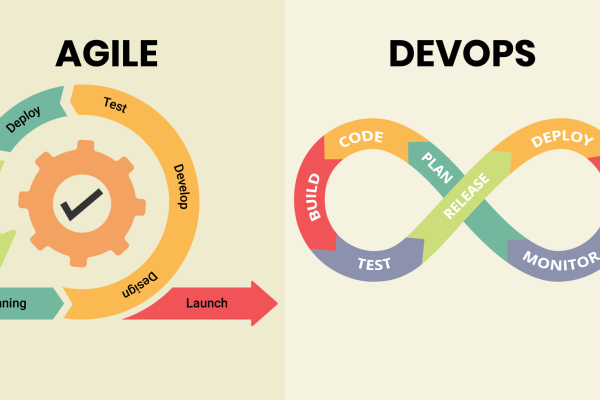
Module 1: DevOps Foundation and Agile Principles: DevOps evolution and key concepts, Agile vs DevOps: similarities and integration, Principles of Agile Manifesto in DevOps, Cultural shift from silos to collaboration, Role of Lean in DevOps, Agile Scrum overview and its role in DevOps.
Module 2: Continuous Integration and Continuous Deployment (CI/CD): Introduction to CI/CD pipeline, Tools for CI: Jenkins, GitLab CI, TeamCity, Automating builds and test execution, Continuous deployment and delivery strategies, Version control systems and Git workflows.
Module 3: Configuration Management and Infrastructure as Code (IaC): Infrastructure provisioning tools: Terraform, CloudFormation, Introduction to configuration tools: Ansible, Chef, Puppet, Environment consistency through IaC, Managing infrastructure in Agile projects, Secrets and configuration management.
Module 4: Containerization and Orchestration: Introduction to containers and Docker, Creating Docker images and Dockerfiles, Docker Compose and container networking, Kubernetes fundamentals and architecture, Deploying and scaling applications in Kubernetes, Agile delivery with containers.
Module 5: Monitoring, Logging and Feedback Loops: Importance of observability in DevOps, Monitoring tools: Prometheus, Grafana, ELK stack for centralized logging, Tracing and incident response, Feedback loops in Agile and DevOps, SRE principles and SLIs/SLOs.
Module 6: DevOps Strategy, Security and Implementation: Building a DevOps adoption roadmap, DevSecOps: integrating security in pipelines, Governance and compliance in DevOps, Value stream mapping in Agile-DevOps, Measuring DevOps success: KPIs and metrics, Case studies and real-world implementation strategies.
After successful completion of the Certificate in DevOps Master (Agile Focus), graduates can pursue high-growth careers in DevOps, Cloud Engineering, Agile delivery, CI/CD automation, and Site Reliability Engineering across industries in India. Below is a detailed overview of career options with salary ranges (India).
1. DevOps Engineer
Role & Responsibilities
-
Build and manage CI/CD pipelines
-
Automate infrastructure and deployments
-
Collaborate with Agile development teams
Industries
IT services, SaaS companies, startups, enterprises
Salary Range (India)
-
Entry Level: ₹5 – 8 LPA
-
Mid Level: ₹10 – 18 LPA
-
Senior Level: ₹22 – 40 LPA
2. Agile DevOps Engineer
Role & Responsibilities
-
Integrate DevOps practices with Agile frameworks
-
Support sprint-based releases and continuous delivery
-
Improve collaboration between development and operations
Industries
Product companies, fintech, e-commerce
Salary Range
-
Entry Level: ₹6 – 9 LPA
-
Mid Level: ₹12 – 20 LPA
-
Senior Level: ₹25 – 45 LPA
3. Site Reliability Engineer (SRE)
Role & Responsibilities
-
Ensure system reliability, scalability, and uptime
-
Implement monitoring, alerting, and incident response
-
Automate operational tasks
Industries
Cloud platforms, SaaS providers, large enterprises
Salary Range
-
Entry Level: ₹8 – 12 LPA
-
Mid Level: ₹15 – 25 LPA
-
Senior Level: ₹30 – 50 LPA
4. Cloud DevOps Engineer
Role & Responsibilities
-
Deploy and manage applications on cloud platforms
-
Automate cloud infrastructure using IaC tools
-
Optimize performance and cost
Industries
Cloud service providers, IT consulting
Salary Range
-
Entry Level: ₹6 – 9 LPA
-
Mid Level: ₹12 – 22 LPA
-
Senior Level: ₹25 – 45 LPA
5. CI/CD Pipeline Engineer
Role & Responsibilities
-
Design and maintain automated build and release pipelines
-
Integrate testing and security into pipelines
-
Improve deployment frequency and reliability
Industries
Software product companies, enterprises
Salary Range
-
Entry Level: ₹5 – 8 LPA
-
Mid Level: ₹10 – 18 LPA
-
Senior Level: ₹22 – 35 LPA
6. Platform Engineer
Role & Responsibilities
-
Build internal developer platforms
-
Standardize tooling and deployment workflows
-
Enable self-service infrastructure for teams
Industries
Product companies, large enterprises
Salary Range
-
Entry Level: ₹8 – 12 LPA
-
Mid Level: ₹15 – 25 LPA
-
Senior Level: ₹30 – 50 LPA
7. DevSecOps Engineer
Role & Responsibilities
-
Integrate security into DevOps pipelines
-
Automate security testing and compliance checks
-
Ensure secure deployments
Industries
Fintech, BFSI, regulated industries
Salary Range
-
Entry Level: ₹7 – 10 LPA
-
Mid Level: ₹12 – 22 LPA
-
Senior Level: ₹25 – 45 LPA
8. Agile Project Manager / Scrum Master (DevOps Environment)
Role & Responsibilities
-
Manage Agile teams in DevOps environments
-
Facilitate sprint planning, reviews, and retrospectives
-
Ensure continuous delivery goals are met
Industries
IT services, product companies
Salary Range
-
Entry Level: ₹8 – 12 LPA
-
Mid Level: ₹15 – 25 LPA
-
Senior Level: ₹30 – 45 LPA
9. DevOps Automation Architect
Role & Responsibilities
-
Design enterprise DevOps automation frameworks
-
Define best practices and toolchains
-
Lead large-scale DevOps transformations
Industries
Enterprises, consulting firms
Salary Range
-
Senior Level: ₹30 – 60 LPA
10. Release & Deployment Manager
Role & Responsibilities
-
Plan and manage software releases
-
Coordinate cross-team deployments
-
Ensure Agile delivery timelines
Industries
Large enterprises, product companies
Salary Range
-
Mid Level: ₹12 – 20 LPA
-
Senior Level: ₹25 – 40 LPA
11. DevOps Consultant
Role & Responsibilities
-
Advise organizations on DevOps and Agile adoption
-
Implement CI/CD and cloud automation strategies
-
Train teams on DevOps best practices
Industries
Consulting firms, digital transformation projects
Salary Range
-
Entry Level: ₹8 – 12 LPA
-
Mid Level: ₹15 – 30 LPA
-
Senior Level: ₹35 – 60 LPA
12. Freelance DevOps Engineer
Role & Responsibilities
-
Design and maintain DevOps pipelines for clients
-
Automate cloud and application infrastructure
-
Provide Agile DevOps consulting
Earnings (India)
-
Beginner: ₹80,000 – ₹1.5 lakh per month
-
Experienced: ₹2.5 – 5+ lakh per month
Key Industries Hiring DevOps Professionals in India
-
SaaS & Product Companies
-
Cloud & IT Services
-
Fintech & E-commerce
-
BFSI & Telecom
-
Startups & Unicorns
-
Government Digital Transformation Projects
Career Outlook in India
DevOps with an Agile focus is among the most in-demand tech skills in India. Organizations adopting cloud-native and microservices architectures heavily rely on DevOps Masters for speed, stability, and innovation, offering excellent salary growth and leadership opportunities.