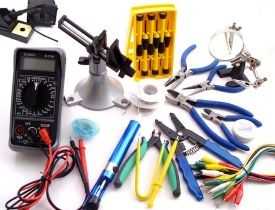
Diploma in Robotics (Arduino)

Rs.8000 Rs.4000

★★★★★ 4.9/5

50% Discount will end in

A Diploma in Robotics (Arduino) provides a solid foundation for anyone looking to get started in the field of robotics, automation, and embedded systems. With a focus on using Arduino to build and program robots.

Description

Course Name: Diploma in Robotics (Arduino)

Course Id: DCC/Q0001.

Eligibility: 10+2 Grade (higher secondary) or Equivalent.

Objective: A Diploma in Robotics (Arduino) is a specialized course that focuses on the practical application of Arduino (an open-source hardware and software platform) to design, build, and program robots. Arduino is widely used in robotics due to its flexibility, ease of use, and low cost. This course typically covers the fundamentals of robotics, electronics, and programming, with a focus on using the Arduino platform to create robots and automation systems.

Duration: Six Months.

🎓 How to Enroll and Get Certified in Your Chosen Course:

✔️ Step 1: Choose the course you wish to get certified in.

✔️ Step 2: Click on the “Enroll Now” button.

✔️ Step 3: Proceed with the enrollment process.

✔️ Step 4: Enter your billing details and continue to course fee payment.

✔️ Step 5: You will be redirected to the payment gateway. Pay the course and exam fee using one of the following methods:
Debit/Credit Card, Wallet, Paytm, Net Banking, UPI, or Google Pay.

✔️ Step 6: After successful payment, you will receive your study material login ID and password via email within 48 hours of fee payment.

✔️ Step 7: Once you complete the course, take the online examination.

✔️ Step 8: Upon passing the examination, you will receive:
• A soft copy (scanned) of your certificate via email within 7 days of examination.
• A hard copy (original with official seal and signature) sent to your address within 45 day of declaration of result.

✔️ Step 9: After certification, you will be offered job opportunities aligned with your area of interest.

Online Examination Detail:

  • Duration- 120 minutes.
  • No. of Questions- 60. (Multiple Choice Questions).
  • 10 Questions from each module, each carry 10 marks.
  • Maximum Marks- 600, Passing Marks- 40%.
  • There is no negative marking in this module.
How Students will be Graded:
S.No. Marks Grade
1 91-100 O (Outstanding)
2 81-90 A+ (Excellent)
3 71-80 A (Very Good)
4 61-70 B (Good)
5 51-60 C (Average)
6 41-50 P (Pass)
7 0-40 F (Fail)

🌟 Key Benefits of Certification- Earning a professional certification not only validates your skills but also enhances your employability. Here are the major benefits you gain:

✅ Practical, Job-Ready Skills – Our certifications are designed to equip you with real-world, hands-on skills that match current industry demands — helping you become employment-ready from day one.

📜 Lifetime Validity – Your certification is valid for a lifetime — no renewals or expirations. It serves as a permanent proof of your skills and training.

🔍 Lifetime Certificate Verification – Employers and institutions can verify your certification anytime through a secure and reliable verification system — adding credibility to your qualifications.

🎯 Industry-Aligned Certification –All certifications are developed in consultation with industry experts to ensure that what you learn is current, relevant, and aligned with market needs.

💼 Preferred by Employers – Candidates from ISO-certified institutes are often prioritized by recruiters due to their exposure to standardized, high-quality training.

🤝 Free Job Assistance Based on Your Career Interests – Receive personalized job assistance and career guidance in your preferred domain, helping you land the right role faster.

Syllabus

Introduction to Robotics and Arduino: Basics of Robotics and Automation, Introduction to Arduino and Its Components, Evolution of Robotics and Its Applications, Understanding Microcontrollers vs. Microprocessors, Different Types of Robots and Their Uses, Basics of Embedded Systems, Introduction to Open-Source Electronics, Overview of Arduino IDE and Programming, Basics of Sensors and Actuators, Hands-on Setup of Arduino Board.

Electronic Components and Circuit Design: Understanding Resistors, Capacitors, and Diodes, Working with Transistors and Relays, Introduction to Breadboards and Circuit Prototyping, Power Supply Requirements for Robotics, Understanding Pull-up and Pull-down Resistors, Using Multimeter for Circuit Testing, Basics of Soldering and PCB Design, Understanding PWM (Pulse Width Modulation), Introduction to Circuit Simulation Software, Hands-on Basic Circuit Assembly.

Arduino Programming Basics: Understanding C/C++ for Arduino, Writing and Uploading Arduino Code, Basics of Variables, Loops, and Functions, Using Digital and Analog Pins, Reading Sensor Data with Arduino, Serial Communication and Debugging, Using Libraries for Arduino Programming, Introduction to Interrupts and Timers, Hands-on LED Blinking and Sensor Data Collection, Troubleshooting Common Coding Errors.

Working with Sensors and Modules: Types of Sensors Used in Robotics, Connecting and Using Ultrasonic Sensors, Working with Infrared (IR) Sensors, Using Temperature and Humidity Sensors, Interfacing Light Sensors (LDR) with Arduino, Using Accelerometers and Gyroscopes, Reading Data from Gas and Smoke Sensors, Connecting RFID Modules for Access Control, Hands-on Motion Detection with PIR Sensors, Real-Life Applications of Sensor-Based Robots.

Motor Control and Actuators: Understanding Different Types of Motors (DC, Servo, Stepper), Controlling DC Motors with Arduino, Using Motor Driver Modules (L298N, L293D), Servo Motor Control for Robotic Arms, Stepper Motor Interfacing and Applications, PWM Speed Control for Motors, Using Relays to Control High Power Devices, Hands-on Building a Motorized Robot, Basics of Mechatronics and Actuators, Troubleshooting Motor and Driver Issues.

Wireless Communication and IoT in Robotics: Introduction to Wireless Communication Protocols, Connecting Arduino with Bluetooth Modules (HC-05, HC-06), Using RF Modules for Remote Control, Wi-Fi-Based IoT Robotics with ESP8266, Introduction to MQTT for IoT Robots, Hands-on Controlling Robots with Mobile Apps, Using Zigbee for Robotics Communication, GSM Module Interfacing for SMS-Controlled Robots, Basics of Cloud-Based Robotics Control, Real-World IoT Robotics Applications.

Job Opportunities after completion of Diploma in Robotics (Arduino) course:

Graduates of a Diploma in Robotics (Arduino) program in India can explore diverse career opportunities in fields such as robotics, automation, electronics, and IoT. Here’s a detailed look at potential career paths and the approximate salary ranges in India:


1. Robotics Technician

  • Role: Assemble, test, maintain, and troubleshoot robotic systems.
  • Industries: Manufacturing, automotive, healthcare, and defense.
  • Salary Range: ₹2.5 to ₹4 LPA (Entry-level).

2. Arduino Developer/Programmer

  • Role: Develop and program Arduino-based systems for IoT and robotics projects.
  • Industries: IoT startups, home automation, and consumer electronics.
  • Salary Range: ₹3 to ₹6 LPA (with experience, it can go up to ₹10 LPA).

3. Automation Engineer (Entry-Level)

  • Role: Design and implement automation solutions, including robotic systems in industrial settings.
  • Industries: Manufacturing, logistics, FMCG, and automotive.
  • Salary Range: ₹3 to ₹6 LPA.

4. Embedded Systems Engineer (Arduino Specialization)

  • Role: Work with microcontrollers (Arduino, Raspberry Pi, etc.) to design smart devices.
  • Industries: IoT, smart devices, and electronics manufacturing.
  • Salary Range: ₹3.5 to ₹7 LPA.

5. IoT Specialist

  • Role: Develop connected devices and integrate them with robotic systems for data-driven solutions.
  • Industries: Home automation, healthcare, agriculture, and logistics.
  • Salary Range: ₹4 to ₹8 LPA.

6. Technical Support Engineer (Robotics/Automation)

  • Role: Provide support and training for robotic systems and automation tools.
  • Industries: Robotics companies, automation vendors, and technical institutes.
  • Salary Range: ₹2.5 to ₹4.5 LPA.

7. Field Service Engineer (Robotics/Automation)

  • Role: Maintain and repair robotic systems in industrial settings.
  • Industries: Automotive, FMCG, and electronics.
  • Salary Range: ₹3 to ₹5 LPA.

8. Entrepreneurship/Startups

  • Role: Establish your own robotics or Arduino-based project development company.
  • Potential: Varies widely based on the success of the business.
  • Income Range: ₹5 to ₹20+ LPA (once established).

9. Robotics Educator/Trainer

  • Role: Teach robotics, Arduino programming, and automation concepts in schools, colleges, or private institutions.
  • Salary Range: ₹2.5 to ₹5 LPA (can increase with experience and reputation).

10. R&D Assistant in Robotics

  • Role: Assist in research and development of new robotic technologies and prototypes.
  • Industries: Defense, healthcare robotics, and tech startups.
  • Salary Range: ₹4 to ₹7 LPA.

Factors Influencing Salaries:

  1. Experience: Salaries increase with hands-on experience and project exposure.
  2. Location: Metro cities (e.g., Bengaluru, Hyderabad, Pune) often offer higher pay.
  3. Certifications: Additional certifications in IoT, AI, or advanced robotics can significantly enhance job prospects and salaries.

Growth Prospects:

  • Robotics and automation are rapidly growing fields in India, with increasing adoption in manufacturing, healthcare, and logistics.
  • Upskilling in related technologies like machine learning, AI, and Python programming can further boost career prospects.

Frequently Asked Questions (FAQs)

1. Is IISDT courses valid?

Yes. This is a professional online Certificate/Diploma course offered by IISDT (Indian Institute of Skill Development Training). The course is designed for skill development, professional enhancement, and career advancement.

2. Who can enroll in this course?

Students, working professionals, entrepreneurs, homemakers, freelancers, job seekers, and anyone interested in developing knowledge and skills in the subject area can enroll.

3. What is the duration of the course?

The duration varies depending on the program. The exact course duration is mentioned on the respective course page. Most courses offer flexible learning, allowing learners to study at their own pace.

4. Are study materials provided?

Yes. Learners receive digital study materials, e-books, presentations, and other learning resources to support their studies.

5. Is there an examination?

Yes, all courses include an online examination or assessment. Upon successful completion, learners are awarded the relevant Diploma or Certificate.

6. How will I receive my certificate?

Upon successful completion of the course requirements, learners receive a digitally verifiable certificate via email. A hard copy of the original certificate is also dispatched to the registered address where applicable.

7. Can working professionals join this course?

Yes. The flexible learning format makes the course suitable for working professionals and individuals with busy schedules.

8. Is prior experience required?

No. Most courses are suitable for beginners as well as experienced professionals unless specific eligibility requirements are mentioned.

9. Can I study from anywhere?

Yes. As the course is delivered online, learners can access study materials from anywhere with an internet connection.

10. Is there an age limit for enrollment?

No. There is generally no age restriction for enrollment.

11. Will I get placement assistance?

The course helps improve knowledge, skills, and employability. If placement assistance is available for a specific program, it will be mentioned on the course page.

12. Can I add this certificate to my resume or LinkedIn profile?

Yes. The certificate can be included in resumes, CVs, professional portfolios, and LinkedIn profiles.

13. Are there any hidden charges?

No. The fee displayed at the time of enrollment is the applicable course fee. There are no hidden charges.

14. Is technical support available?

Yes. Learners can contact the support team for assistance regarding enrollment, course access, study materials, and certificates.

15. Is the Certificate Valid for a Lifetime?

Yes. The certificate is valid for a lifetime and can be verified online through the IISDT certificate verification system.

16. How do I enroll in the course?

You can enroll online through the respective course page. After successful enrollment, you will receive your Enrollment Number and login credentials.

17. Are the courses completely online?

Yes. All learning materials, assessments, and certification processes are conducted online.

18. Can I access the course on mobile devices?

Yes. Course materials can be accessed on smartphones, tablets, laptops, and desktop computers.

19. Can I enroll in multiple courses at the same time?

Yes. Learners may enroll in multiple courses according to their learning goals and interests.

20. Why should I choose IISDT?

IISDT offers flexible online learning, affordable fees, digital certification, self-paced study options, and industry-oriented programs.

21. Can I enroll at any time?

Yes. Most courses offer flexible enrollment throughout the year.

22. Can I download the study materials?

Yes. Study materials are downloadable and available through the learner dashboard.

23. Are the courses suitable for beginners?

Yes. Most programs are designed for beginners and do not require prior experience unless specifically mentioned.

27. What language are the study materials available in?

Course materials are generally provided in English or bilingual format depending on the program.

28. What documents are required for enrollment?

Educational qualification certificates, photo ID/address proof, and a recent passport-size photograph may be required depending on the course.

29. Can international students enroll?

Yes. Learners from India and other countries can enroll in online courses offered by IISDT.

30. How secure is the online payment process?

Payments are processed through secure payment gateways to help ensure safe transactions.

31. What happens if I fail the exam?

You can retake the assessment. Multiple attempts are permitted without additional fees.

32. Can I learn while doing a job or business?

Yes. The self-paced structure allows learners to study alongside work, business, or other commitments.

33. Are the courses designed for skill development?

Yes. The programs are designed to support practical learning, professional growth, and career development.

34. Are there any additional charges after enrollment?

No. The course fee displayed during enrollment covers the course and certification process unless otherwise stated.

35. Is there any fee for re-examination or reassessment?

No. IISDT does not charge any additional fee for re-examination or reassessment.

Course Rating

4.9/5
★★★★★
★★★★★

Based on 59 student ratings

Highly Rated Course