
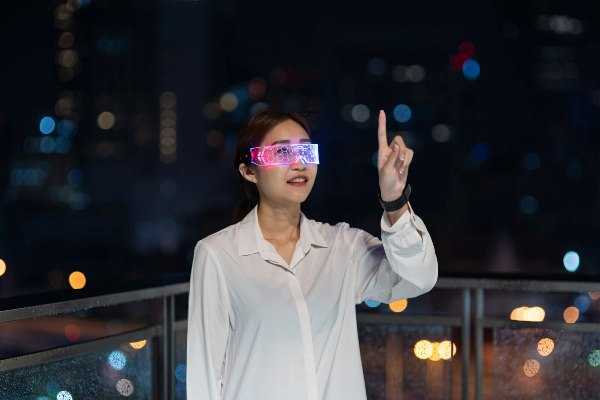
Description
Certification Name: Certificate in VR/AR Content Creator
Course Id: CVRARCC/Q0001.
Eligibility: Graduation or Equivalent.
Objective: The Certified VR/AR Content Creator course is designed to equip learners with the creative and technical skills required to develop immersive content for Virtual Reality (VR) and Augmented Reality (AR) applications. The course covers the fundamentals of immersive storytelling, 3D content creation, spatial design, interactivity, and user experience (UX) in virtual environments. Learners will gain hands-on experience with industry-standard tools and platforms such as Unity, Unreal Engine, Blender, Spark AR, and WebXR.
Duration: Three Month.
 How to Enroll and Get Certified in Your Chosen Course:
Step 1: Choose the course you wish to get certified in.
Step 2: Click on the “Enroll Now” button.
Step 3: Proceed with the enrollment process.
Step 4: Enter your billing details and continue to course fee payment.
Step 5: You will be redirected to the payment gateway. Pay the course and exam fee using one of the following methods:
Debit/Credit Card, Wallet, Paytm, Net Banking, UPI, or Google Pay.
Step 6: After successful payment, you will receive your study material login ID and password via email within 48 hours of fee payment.
Step 7: Once you complete the course, take the online examination.
Step 8: Upon passing the examination, you will receive:
• A soft copy (scanned) of your certificate via email within 7 days of examination.
• A hard copy (original with official seal and signature) sent to your address within 45 day of declaration of result.
Step 9: After certification, you will be offered job opportunities aligned with your area of interest.
Online Examination Detail:
Duration- 60 minutes.
No. of Questions- 30. (Multiple Choice Questions).
Maximum Marks- 100, Passing Marks- 40%.
There is no negative marking in this module.
| Marking System: | ||||||
| S.No. | No. of Questions | Marks Each Question | Total Marks | |||
| 1 | 10 | 5 | 50 | |||
| 2 | 5 | 4 | 20 | |||
| 3 | 5 | 3 | 15 | |||
| 4 | 5 | 2 | 10 | |||
| 5 | 5 | 1 | 5 | |||
| 30 | 100 | |||||
| How Students will be Graded: | ||||||
| S.No. | Marks | Grade | ||||
| 1 | 91-100 | O (Outstanding) | ||||
| 2 | 81-90 | A+ (Excellent) | ||||
| 3 | 71-80 | A (Very Good) | ||||
| 4 | 61-70 | B (Good) | ||||
| 5 | 51-60 | C (Average) | ||||
| 6 | 40-50 | P (Pass) | ||||
| 7 | 0-40 | F (Fail) | ||||
Key Benefits of Certification- Earning a professional certification not only validates your skills but also enhances your employability. Here are the major benefits you gain:
Practical, Job-Ready Skills – Our certifications are designed to equip you with real-world, hands-on skills that match current industry demands — helping you become employment-ready from day one.
Lifetime Validity – Your certification is valid for a lifetime — no renewals or expirations. It serves as a permanent proof of your skills and training.
Lifetime Certificate Verification – Employers and institutions can verify your certification anytime through a secure and reliable verification system — adding credibility to your qualifications.
Industry-Aligned Certification –All certifications are developed in consultation with industry experts to ensure that what you learn is current, relevant, and aligned with market needs.
Preferred by Employers – Candidates from ISO-certified institutes are often prioritized by recruiters due to their exposure to standardized, high-quality training.
Free Job Assistance Based on Your Career Interests – Receive personalized job assistance and career guidance in your preferred domain, helping you land the right role faster.
Assessment Modules:
Module 1: Introduction to VR/AR Technologies and Ecosystem: Understanding the differences between Virtual Reality (VR), Augmented Reality (AR), and Mixed Reality (MR), Overview of VR/AR applications across industries (entertainment, education, healthcare, retail), Components of the XR ecosystem: headsets, mobile devices, sensors, platforms, History and evolution of immersive content creation, Current market trends, audience behavior, and content types, Role of a VR/AR content creator in multidisciplinary teams.
Module 2: Principles of Immersive Storytelling and User Experience: Narrative structures in 360° and interactive environments, Spatial storytelling and the role of user perspective, Designing user engagement in VR and AR experiences, Understanding motion, presence, and immersion, Writing scripts and storyboards for immersive formats, Ethical storytelling and accessibility in immersive content.
Module 3: Tools and Software for VR/AR Content Creation: Overview of leading platforms (Unity, Unreal Engine, Spark AR, Lens Studio), Introduction to 3D modeling tools (Blender, Maya, Cinema 4D), Creating 360° videos using VR cameras and stitching software, Using AR SDKs (ARKit, ARCore, Vuforia, WebAR), Importing and animating assets for interaction and environment design, Basics of coding with C#, JavaScript, and visual scripting tools.
Module 4: Design and Development of Interactive Experiences: Creating environments, avatars, and props in 3D space, Designing UI/UX for VR and AR experiences, Integrating user inputs (gesture, gaze, voice, touch) for interactivity, Scripting basic interactions and animations in Unity/Unreal, Optimizing performance for mobile vs headset-based platforms, Testing and iterating immersive experiences for smooth deployment.
Module 5: Publishing, Deployment, and Platform Optimization: Exporting content for various devices (Oculus, Vive, HoloLens, mobile AR), Publishing to app stores, WebXR, or social media (Instagram, Snapchat), Preparing assets for platform compliance and runtime efficiency, Managing version control and updates for immersive apps, Analytics and feedback tools for immersive content performance, Ensuring data privacy and user safety in AR/VR environments.
Module 6: Portfolio Development and Career Opportunities: Planning and producing a capstone AR/VR project, Building a portfolio with immersive demos and walkthrough videos, Best practices for presenting immersive content to clients and recruiters, Collaborating with developers, artists, and storytellers in the XR space, Freelancing, startups, and studio roles for VR/AR creators, Emerging trends: Metaverse, spatial computing, and AI-enhanced XR experiences.
🎓 Career Opportunities After Certificate in VR/AR Content Creator
A Certificate in VR/AR Content Creator prepares professionals to design, develop, and implement immersive virtual reality (VR) and augmented reality (AR) experiences for gaming, education, marketing, simulation, and digital media. The course develops skills in 3D modeling, VR/AR software, Unity/Unreal Engine, interactive storytelling, UX design for immersive experiences, and content optimization for multiple devices.
With the rapid adoption of VR/AR technologies in India’s gaming, education, advertising, and digital media sectors, skilled VR/AR content creators are in strong demand across startups, tech firms, and media production companies.
1️⃣ VR/AR Content Developer
Key Responsibilities:
Design and develop VR/AR experiences, create interactive 3D environments, implement animations, and integrate user interactions for immersive content.
Salary in India:
₹4 – ₹10 LPA (Entry Level)
₹12 – ₹25 LPA (Experienced Level)
2️⃣ AR/VR Designer / 3D Artist
Key Responsibilities:
Create 3D models, textures, and animations for AR/VR applications, collaborate with developers to implement assets, and optimize visuals for performance.
Salary in India:
₹4 – ₹9 LPA (Entry Level)
₹10 – ₹20 LPA (Experienced Level)
3️⃣ Immersive Experience Producer
Key Responsibilities:
Plan and manage VR/AR projects, oversee content development, ensure timelines and budgets are met, and coordinate teams for creative and technical tasks.
Salary in India:
₹5 – ₹12 LPA (Mid-Level)
₹15 – ₹30 LPA (Experienced Level)
4️⃣ VR/AR Interaction Designer
Key Responsibilities:
Design user interfaces and interactive experiences within VR/AR applications, ensure smooth user navigation, and implement intuitive controls.
Salary in India:
₹4 – ₹10 LPA (Entry Level)
₹12 – ₹22 LPA (Experienced Level)
5️⃣ Freelance VR/AR Content Creator
Key Responsibilities:
Develop custom VR/AR solutions for clients in gaming, education, marketing, real estate, or corporate training; manage end-to-end project execution independently.
Earning Potential in India:
₹50,000 – ₹3,50,000+ per month depending on expertise, client base, and project complexity.
📈 Career Growth Path
VR/AR Content Developer → Immersive Experience Designer → Senior VR/AR Developer → VR/AR Project Lead → Head of Immersive Content / Studio Owner
With advanced skills in Unity, Unreal Engine, 3D modeling, interactive storytelling, and team management, professionals can scale to ₹20 – ₹50 LPA within 5–8 years in gaming, advertising, education, and digital media industries.
🎓 Industries Hiring
-
Gaming Studios & VR/AR Game Development Companies
-
Film & OTT Production Houses
-
Digital Marketing & Advertising Agencies
-
Educational Technology (EdTech) Companies
-
Corporate Training & Simulation Providers
-
Freelance / Independent VR/AR Projects
