Description
Course Name: Certificate in Solar Energy Technician
Course Id: CSET/Q1001.
Eligibility: 10th Grade (high School) or Equivalent.
Duration: Three Month.
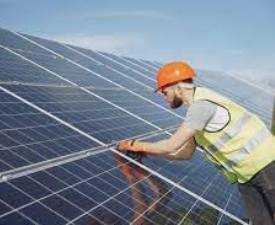
Objective: The Certificate in Solar Energy Technician course is designed to provide students with the necessary skills and knowledge to work in the renewable energy sector, specifically focusing on solar energy systems. This program covers the installation, maintenance, and troubleshooting of solar power systems, such as photovoltaic (PV) panels and solar thermal systems. Students will learn both theoretical and practical aspects of solar energy, preparing them for a career in the rapidly growing field of renewable energy.
 How to Enroll and Get Certified in Your Chosen Course:
 Step 1: Choose the course you wish to get certified in.
Step 2: Click on the “Enroll Now” button.
Step 3: Proceed with the enrollment process.
Step 4: Enter your billing details and continue to course fee payment.
Step 5: You will be redirected to the payment gateway. Pay the course and exam fee using one of the following methods:
Debit/Credit Card, Wallet, Paytm, Net Banking, UPI, or Google Pay.
Step 6: After successful payment, you will receive your study material login ID and password via email within 48 hours of fee payment.
Step 7: Once you complete the course, take the online examination.
Step 8: Upon passing the examination, you will receive:
• A soft copy (scanned) of your certificate via email within 7 days of examination.
• A hard copy (original with official seal and signature) sent to your address within 45 day of declaration of result.
Step 9: After certification, you will be offered job opportunities aligned with your area of interest.
Online Examination Detail:
Duration- 60 minutes.
No. of Questions- 30. (Multiple Choice Questions).
Maximum Marks- 100, Passing Marks- 40%.
There is no negative marking in this module.
| Marking System: | ||||||
| S.No. | No. of Questions | Marks Each Question | Total Marks | |||
| 1 | 10 | 5 | 50 | |||
| 2 | 5 | 4 | 20 | |||
| 3 | 5 | 3 | 15 | |||
| 4 | 5 | 2 | 10 | |||
| 5 | 5 | 1 | 5 | |||
| 30 | 100 | |||||
| How Students will be Graded: | ||||||
| S.No. | Marks | Grade | ||||
| 1 | 91-100 | O (Outstanding) | ||||
| 2 | 81-90 | A+ (Excellent) | ||||
| 3 | 71-80 | A (Very Good) | ||||
| 4 | 61-70 | B (Good) | ||||
| 5 | 51-60 | C (Average) | ||||
| 6 | 40-50 | P (Pass) | ||||
| 7 | 0-40 | F (Fail) | ||||
 Key Benefits of Certification- Earning a professional certification not only validates your skills but also enhances your employability. Here are the major benefits you gain:
 Practical, Job-Ready Skills – Our certifications are designed to equip you with real-world, hands-on skills that match current industry demands — helping you become employment-ready from day one.
 Lifetime Validity – Your certification is valid for a lifetime — no renewals or expirations. It serves as a permanent proof of your skills and training.
 Lifetime Certificate Verification – Employers and institutions can verify your certification anytime through a secure and reliable verification system — adding credibility to your qualifications.
 Industry-Aligned Certification –All certifications are developed in consultation with industry experts to ensure that what you learn is current, relevant, and aligned with market needs.
 Preferred by Employers – Candidates from ISO-certified institutes are often prioritized by recruiters due to their exposure to standardized, high-quality training.
 Free Job Assistance Based on Your Career Interests – Receive personalized job assistance and career guidance in your preferred domain, helping you land the right role faster.
Syllabus:
Introduction to Solar Energy: Basics of solar energy, Solar radiation and its characteristics, Types of solar energy systems, Advantages and challenges of solar energy, Applications of solar power, Environmental benefits of solar energy, Basics of photovoltaic (PV) technology, Solar thermal vs. photovoltaic systems, Global trends in solar energy, Solar energy policies and incentives.
Fundamentals of Photovoltaic (PV) Systems: Working principles of solar PV cells, Types of solar panels (monocrystalline, polycrystalline, thin-film), Solar panel efficiency and factors affecting performance, Components of a PV system, Series and parallel connections in PV systems, Solar inverters and their functions, Types of solar batteries and energy storage systems, Balance of system (BOS) components, Overview of grid-tied and off-grid systems, Safety considerations in PV installations.
Solar System Installation & Site Assessment: Understanding solar site assessment, Factors affecting site selection, Solar potential estimation tools, Tilt angle and orientation of solar panels, Basics of solar tracking systems, Understanding shading analysis, Structural considerations for rooftop solar systems, Load assessment and energy demand calculations, Hands-on training for PV system installation, Common installation mistakes and troubleshooting.
Solar Panel Mounting & Structural Design: Types of solar mounting structures, Ground-mounted vs. rooftop solar installations, Roof load analysis and reinforcement, Wind and snow load considerations, Mounting techniques for different surfaces, Structural stability and safety requirements, Cable management and wiring techniques, Integration with building infrastructure, Weatherproofing and maintenance, Hands-on practice in solar panel mounting.
Solar Inverters & Battery Storage Systems: Types of solar inverters (string, micro, hybrid), Working principles of inverters, Role of Maximum Power Point Tracking (MPPT), Grid-tied vs. off-grid inverters, Energy storage solutions (lead-acid, lithium-ion, flow batteries), Battery sizing and selection, Charge controllers and their functions, Battery maintenance and troubleshooting, Understanding net metering and grid interaction, Smart solar inverters and future trends.
Solar System Wiring & Electrical Components: Basics of electrical circuits, Solar system wiring standards, Types of solar cables and connectors, DC and AC wiring in PV systems, Fuse and circuit breaker selection, Earthing and grounding in solar installations, Surge protection and safety devices, Electrical load balancing, Smart monitoring systems for solar setups, Common electrical issues and troubleshooting.
After successful completion of the Certificate in Solar Energy Technician program, graduates are trained in solar panel installation, maintenance, wiring, system design, troubleshooting, and safety protocols. The growing demand for clean and renewable energy in India makes this skill highly employable in both government and private sectors under missions like PM-KUSUM, MNRE Solar Rooftop Scheme, and Ujjwala Yojana.
🎓 Career Options After Certificate in Solar Energy Technician
1. Solar Panel Installer
-
Role: Install solar PV modules on rooftops or ground-based structures, connect panels with inverters and batteries.
-
Salary Range: ₹2.5 – ₹4.5 LPA
2. Solar Maintenance Technician
-
Role: Clean, inspect, and maintain solar systems; diagnose and fix issues in electrical connections or inverter systems.
-
Salary Range: ₹2.2 – ₹4.8 LPA
3. Rooftop Solar Assistant / Electrician
-
Role: Assist with wiring, mounting structures, grid connections, and metering in residential and commercial setups.
-
Salary Range: ₹2 – ₹4.5 LPA
4. Solar Sales & Installation Executive
-
Role: Support sales teams by providing installation guidance and technical demonstrations to clients.
-
Salary Range: ₹2.5 – ₹5.5 LPA (fixed + incentives)
5. Field Service Technician (Solar Companies)
-
Role: Travel to customer sites to set up, repair, or upgrade solar systems; provide basic training to users.
-
Salary Range: ₹3 – ₹6 LPA
6. Entrepreneur – Solar Kit Installer / Dealer
-
Role: Start a local service or dealership in solar lights, water pumps, rooftop systems, or off-grid kits.
-
Earning Potential: ₹30,000 – ₹1.2 lakh/month (depending on scale and area)
7. Project Site Supervisor – Solar EPC
-
Role: Monitor technical execution and safety compliance at solar project sites (with 2–3 years experience).
-
Salary Range: ₹4 – ₹7 LPA
8. Solar Pump Technician (PM-KUSUM Projects)
-
Role: Install and service solar-powered water pumps in rural irrigation and agricultural fields.
-
Salary Range: ₹2.5 – ₹5 LPA
9. Customer Support Technician (Solar Products)
-
Role: Guide customers on usage, maintenance, and warranty services for solar kits and equipment.
-
Salary Range: ₹2.5 – ₹5 LPA
10. Freelancer / Contractor – Solar Panel Fitter
-
Role: Offer services to builders, house owners, or small industries for standalone solar unit installation.
-
Earning Potential: ₹10,000 – ₹40,000+/project
🧠 Key Skills Acquired
-
Solar PV module and inverter installation
-
Wiring, earthing, and electrical connections
-
Battery systems and net metering setup
-
Site assessment and panel positioning (tilt, direction)
-
Safety protocols and use of protective equipment
-
Preventive maintenance and system troubleshooting
🏢 Industries & Employers Hiring
-
Solar EPC Companies (e.g., Tata Power Solar, Adani Solar, Loom Solar)
-
Renewable Energy Startups & MSMEs
-
Government Schemes (PM-KUSUM, MNRE Rooftop Program)
-
NGOs & Development Agencies promoting solar use
-
Agriculture & Irrigation Agencies (Solar Pumps)
-
Rural Electrification Projects (Mini/Micro-grids)
-
Corporate Parks, Hotels & Institutions using solar energy
📈 Career Growth Path
| Experience | Position | Salary Range |
|---|---|---|
| 0–1 year | Installer / Technician Trainee | ₹2 – ₹3.5 LPA |
| 2–3 years | Senior Technician / Supervisor | ₹4 – ₹6 LPA |
| 4–6 years | Site Manager / Solar Project Lead | ₹6 – ₹10+ LPA |