Description
Certification Name: Certificate in Product Designer
Course Id: CPD/Q0001.
Eligibility: 10+2 (higher Secondary) or Equivalent.
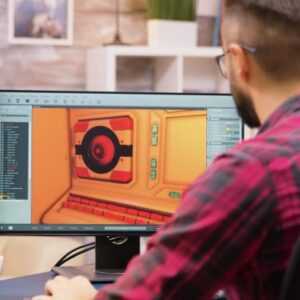
Objective: The Certified Product Designer course is designed to develop professionals skilled in conceptualizing, designing, and refining products that meet user needs and business goals. The course covers the entire product design lifecycle, including user research, ideation, prototyping, usability testing, and final production. Students learn to blend creativity with technical knowledge of materials, manufacturing techniques, and digital tools such as CAD and design software.
Duration: Three Month.
 How to Enroll and Get Certified in Your Chosen Course:
 Step 1: Choose the course you wish to get certified in.
Step 2: Click on the “Enroll Now” button.
Step 3: Proceed with the enrollment process.
Step 4: Enter your billing details and continue to course fee payment.
Step 5: You will be redirected to the payment gateway. Pay the course and exam fee using one of the following methods:
Debit/Credit Card, Wallet, Paytm, Net Banking, UPI, or Google Pay.
Step 6: After successful payment, you will receive your study material login ID and password via email within 48 hours of fee payment.
Step 7: Once you complete the course, take the online examination.
Step 8: Upon passing the examination, you will receive:
• A soft copy (scanned) of your certificate via email within 7 days of examination.
• A hard copy (original with official seal and signature) sent to your address within 45 day of declaration of result.
Step 9: After certification, you will be offered job opportunities aligned with your area of interest.
Online Examination Detail:
Duration- 60 minutes.
No. of Questions- 30. (Multiple Choice Questions).
Maximum Marks- 100, Passing Marks- 40%.
There is no negative marking in this module.
| Marking System: | ||||||
| S.No. | No. of Questions | Marks Each Question | Total Marks | |||
| 1 | 10 | 5 | 50 | |||
| 2 | 5 | 4 | 20 | |||
| 3 | 5 | 3 | 15 | |||
| 4 | 5 | 2 | 10 | |||
| 5 | 5 | 1 | 5 | |||
| 30 | 100 | |||||
| How Students will be Graded: | ||||||
| S.No. | Marks | Grade | ||||
| 1 | 91-100 | O (Outstanding) | ||||
| 2 | 81-90 | A+ (Excellent) | ||||
| 3 | 71-80 | A (Very Good) | ||||
| 4 | 61-70 | B (Good) | ||||
| 5 | 51-60 | C (Average) | ||||
| 6 | 40-50 | P (Pass) | ||||
| 7 | 0-40 | F (Fail) | ||||
 Key Benefits of Certification- Earning a professional certification not only validates your skills but also enhances your employability. Here are the major benefits you gain:
 Practical, Job-Ready Skills – Our certifications are designed to equip you with real-world, hands-on skills that match current industry demands — helping you become employment-ready from day one.
 Lifetime Validity – Your certification is valid for a lifetime — no renewals or expirations. It serves as a permanent proof of your skills and training.
 Lifetime Certificate Verification – Employers and institutions can verify your certification anytime through a secure and reliable verification system — adding credibility to your qualifications.
 Industry-Aligned Certification –All certifications are developed in consultation with industry experts to ensure that what you learn is current, relevant, and aligned with market needs.
 Preferred by Employers – Candidates from ISO-certified institutes are often prioritized by recruiters due to their exposure to standardized, high-quality training.
 Free Job Assistance Based on Your Career Interests – Receive personalized job assistance and career guidance in your preferred domain, helping you land the right role faster.
Assessment Modules:
Module 1: Introduction to Product Design: Product design fundamentals, Design thinking methodology, User research techniques, Market analysis, Problem definition, Design ethics and sustainability.
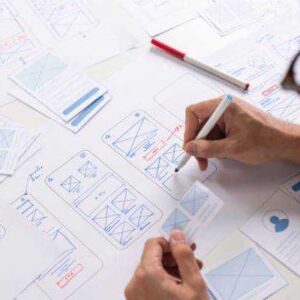
Module 2: User Experience (UX) and User Interface (UI) Design: User personas and journey mapping, Wireframing and prototyping, Interaction design principles, Usability testing, Visual design basics, Accessibility standards.
Module 3: Materials, Manufacturing, and Prototyping: Material selection criteria, Manufacturing processes overview, Rapid prototyping methods, 3D printing technologies, Cost analysis, Design for manufacturability.
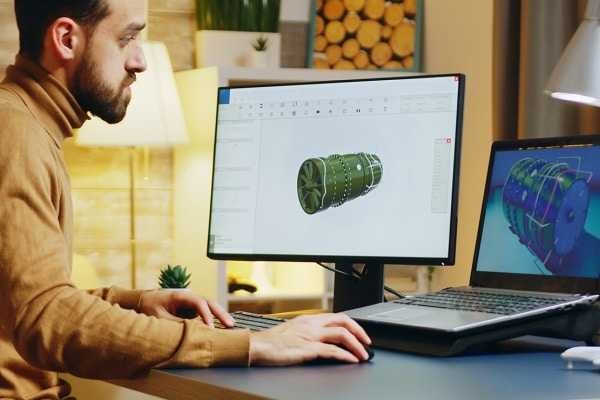
Module 4: Computer-Aided Design (CAD) and Digital Tools: CAD software fundamentals, 3D modeling and rendering, Surface and solid modeling, Digital prototyping, Simulation and testing, Design collaboration tools.
Module 5: Product Development and Project Management: Product lifecycle management, Agile and Scrum methodologies, Cross-functional team collaboration, Risk management, Time and resource planning, Quality assurance.
Module 6: Branding, Marketing, and Professional Practice: Brand identity and positioning, Packaging design, Marketing strategies, Client communication and presentation, Intellectual property rights, Career development and portfolio building.
🎓 Certificate in Product Designer – Career Overview
After completing this certification, you can build a career in manufacturing companies, design studios, consumer electronics, automotive firms, start-ups, and freelance product design projects across India. Product designers develop innovative, functional, and market-ready products, combining creativity, engineering, and user-centered design principles.
🔝 Career Options & Salary Range (India)
-
Product Designer / Industrial Designer – ₹4,00,000 to ₹10,00,000 per year
-
Automotive / Electronics Product Designer – ₹5,00,000 to ₹12,00,000 per year
-
Freelance Product Designer / Consultant – ₹5,50,000 to ₹15,00,000+ per year
-
Senior / Lead Product Designer – ₹6,50,000 to ₹18,00,000 per year
-
Creative Director / Design Manager – ₹8,00,000 to ₹25,00,000+ per year
(Income depends on experience, industry, client base, and project complexity.)
🎯 Key Responsibilities
-
Designing innovative and functional products from concept to prototype
-
Conducting market research, user studies, and feasibility analysis
-
Creating sketches, 3D models, and technical drawings
-
Collaborating with engineers, marketers, and manufacturers
-
Ensuring product designs meet aesthetics, ergonomics, usability, and sustainability standards
📈 Career Growth Path
Junior Product Designer → Product Designer → Senior / Lead Designer → Design Manager / Creative Director → Freelance Consultant
Experienced professionals can lead product development teams, work on cutting-edge consumer products, collaborate with global brands, or start their own product design consultancy.
🧠 Skills That Increase Earning Potential
✔ Proficiency in design software (SolidWorks, AutoCAD, Rhino, Fusion 360, Adobe Suite)
✔ Knowledge of materials, manufacturing processes, and ergonomics
✔ Creativity, problem-solving, and product innovation skills
✔ Collaboration with engineering, marketing, and production teams
✔ Portfolio building, client networking, and project management