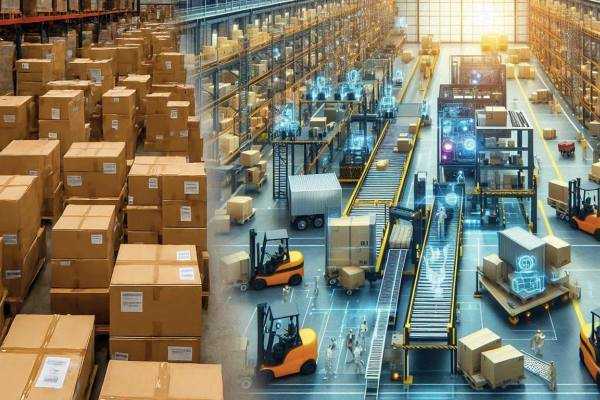
Description
Certification Name: Certificate in Logistics Cost Control Analyst
Course Id: CLCCA/Q0001.
Eligibility: Graduation or Equivalent.
Objective: The Certified Logistics Cost Control Analyst course is designed to equip professionals with the skills to analyze, monitor, and control costs across logistics and supply chain operations. Participants learn cost management techniques, budgeting, financial analysis, freight and inventory cost optimization, performance monitoring, and reporting.
Duration: Three Month.
 How to Enroll and Get Certified in Your Chosen Course:
 Step 1: Choose the course you wish to get certified in.
Step 2: Click on the “Enroll Now” button.
Step 3: Proceed with the enrollment process.
Step 4: Enter your billing details and continue to course fee payment.
Step 5: You will be redirected to the payment gateway. Pay the course and exam fee using one of the following methods:
Debit/Credit Card, Wallet, Paytm, Net Banking, UPI, or Google Pay.
Step 6: After successful payment, you will receive your study material login ID and password via email within 48 hours of fee payment.
Step 7: Once you complete the course, take the online examination.
Step 8: Upon passing the examination, you will receive:
• A soft copy (scanned) of your certificate via email within 7 days of examination.
• A hard copy (original with official seal and signature) sent to your address within 45 day of declaration of result.
Step 9: After certification, you will be offered job opportunities aligned with your area of interest.
Online Examination Detail:
Duration- 60 minutes.
No. of Questions- 30. (Multiple Choice Questions).
Maximum Marks- 100, Passing Marks- 40%.
There is no negative marking in this module.
| Marking System: | ||||||
| S.No. | No. of Questions | Marks Each Question | Total Marks | |||
| 1 | 10 | 5 | 50 | |||
| 2 | 5 | 4 | 20 | |||
| 3 | 5 | 3 | 15 | |||
| 4 | 5 | 2 | 10 | |||
| 5 | 5 | 1 | 5 | |||
| 30 | 100 | |||||
| How Students will be Graded: | ||||||
| S.No. | Marks | Grade | ||||
| 1 | 91-100 | O (Outstanding) | ||||
| 2 | 81-90 | A+ (Excellent) | ||||
| 3 | 71-80 | A (Very Good) | ||||
| 4 | 61-70 | B (Good) | ||||
| 5 | 51-60 | C (Average) | ||||
| 6 | 40-50 | P (Pass) | ||||
| 7 | 0-40 | F (Fail) | ||||
 Key Benefits of Certification- Earning a professional certification not only validates your skills but also enhances your employability. Here are the major benefits you gain:
 Practical, Job-Ready Skills – Our certifications are designed to equip you with real-world, hands-on skills that match current industry demands — helping you become employment-ready from day one.
 Lifetime Validity – Your certification is valid for a lifetime — no renewals or expirations. It serves as a permanent proof of your skills and training.
 Lifetime Certificate Verification – Employers and institutions can verify your certification anytime through a secure and reliable verification system — adding credibility to your qualifications.
 Industry-Aligned Certification –All certifications are developed in consultation with industry experts to ensure that what you learn is current, relevant, and aligned with market needs.
 Preferred by Employers – Candidates from ISO-certified institutes are often prioritized by recruiters due to their exposure to standardized, high-quality training.
 Free Job Assistance Based on Your Career Interests – Receive personalized job assistance and career guidance in your preferred domain, helping you land the right role faster.
Assessment Modules:
Module 1: Fundamentals of Logistics Cost Control: Overview of logistics operations and cost management, Role and responsibilities of a logistics cost control analyst, Key performance indicators (KPIs) for logistics costs, Understanding cost drivers in supply chain, Regulatory and compliance considerations, Importance of cost efficiency in logistics operations.
Module 2: Cost Analysis & Budgeting: Types of logistics costs (fixed, variable, direct, indirect), Budget preparation and allocation, Cost tracking and reporting, Identifying cost reduction opportunities, Variance analysis and corrective measures, Forecasting and financial planning in logistics.
Module 3: Transportation & Freight Cost Management: Freight cost calculation and optimization, Carrier selection and contract negotiation, Route planning and load consolidation for cost efficiency, Fuel cost management and sustainability practices, Monitoring transportation KPIs, Cost-benefit analysis of transport options.
Module 4: Warehouse & Inventory Cost Control: Storage cost analysis and optimization, Inventory carrying cost calculation, Labor and handling cost management, Space utilization and layout efficiency, Technology investment for cost reduction, Performance monitoring and reporting.
Module 5: Technology & Digital Tools: Use of Enterprise Resource Planning (ERP) and Transportation Management Systems (TMS), Data analytics for cost tracking and forecasting, Automated reporting and dashboards, Tools for inventory and warehouse cost monitoring, Scenario analysis and modeling for decision support, Emerging technologies in cost optimization.
Module 6: Strategic Leadership & Advisory Skills: Developing cost control policies and SOPs, Team management and collaboration, Performance evaluation and KPI monitoring, Strategic planning for operational cost efficiency, Stakeholder communication and reporting, Advisory and decision-making skills for logistics cost optimization.
Career Opportunities After Certificate in Logistics Cost Control Analyst
After successful completion of the Certificate in Logistics Cost Control Analyst, graduates can work in manufacturing companies, e-commerce and retail logistics, 3PL/4PL providers, supply chain consulting firms, FMCG distribution, transport companies, and warehousing organizations.
The program prepares professionals to analyze logistics expenses, track operational costs, identify cost-saving opportunities, prepare budgets, and implement financial efficiency strategies in supply chain operations.
1. Logistics Cost Control Analyst
Role: Monitors and analyzes logistics expenses, identifies cost-saving opportunities, and prepares reports.
Salary Range (India): ₹5 – 8 LPA (Entry); ₹10 – 18 LPA (Experienced)
2. Transport Cost Analyst
Role: Evaluates transportation costs, optimizes routes, and recommends cost-efficient strategies.
Salary Range: ₹5 – 8 LPA (Entry); ₹10 – 18 LPA (Experienced)
3. Warehouse Cost Control Analyst
Role: Tracks warehouse operations costs, inventory carrying costs, and storage efficiency metrics.
Salary Range: ₹5 – 7 LPA (Entry); ₹9 – 16 LPA (Experienced)
4. Supply Chain Finance Analyst
Role: Integrates financial data with logistics operations to improve overall supply chain cost efficiency.
Salary Range: ₹5 – 8 LPA (Entry); ₹10 – 18 LPA (Experienced)
5. Freight & Carrier Cost Analyst
Role: Analyzes freight bills, audits carriers, negotiates rates, and ensures compliance with contracts.
Salary Range: ₹5 – 8 LPA (Entry); ₹10 – 18 LPA (Experienced)
6. Inventory & Distribution Cost Analyst
Role: Monitors distribution and inventory costs, identifies inefficiencies, and recommends process improvements.
Salary Range: ₹5 – 7 LPA (Entry); ₹9 – 16 LPA (Experienced)
7. 3PL/4PL Cost Analyst
Role: Analyzes outsourced logistics costs, reviews SLA performance, and ensures cost-effective operations.
Salary Range: ₹5 – 8 LPA (Entry); ₹10 – 18 LPA (Experienced)
8. Logistics Performance & Budget Analyst
Role: Prepares logistics budgets, monitors variances, and evaluates KPIs for cost control.
Salary Range: ₹5 – 8 LPA (Entry); ₹10 – 18 LPA (Experienced)
9. Procurement & Logistics Cost Coordinator
Role: Works with procurement and logistics teams to reduce operational costs and negotiate vendor rates.
Salary Range: ₹5 – 7 LPA (Entry); ₹9 – 16 LPA (Experienced)
10. Senior Logistics Cost Control Manager
Role: Leads cost control strategies across logistics and supply chain functions, implements financial efficiency measures.
Salary Range: ₹8 – 12 LPA (Experienced); ₹15 – 30 LPA+ (Senior Leadership)
Career Progression
With 3–7 years of experience, professionals can progress to:
-
Logistics Finance & Cost Manager
-
Supply Chain Budget Manager
-
Regional/Corporate Logistics Controller
-
Supply Chain Consultant – Cost & Performance
Earning Potential: ₹10 – 30 LPA+, depending on company scale, logistics complexity, and strategic responsibility.
Key Highlights
-
High demand in manufacturing, e-commerce, retail, and 3PL/4PL logistics
-
Focus on cost efficiency, financial analysis, and logistics optimization
-
Exposure to freight, warehouse, inventory, and distribution cost management
-
Ideal for professionals aiming for financial control and strategic supply chain roles