Description
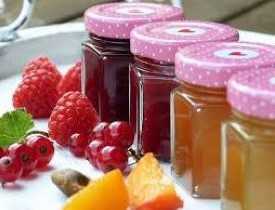
Course Name: Certificate in Jam and Jelly Processing Technologies
Course Id: CJJPT/Q1001.
Eligibility: 10th Grade(High School) or Equivalent.
Duration: One Month.
Objective: The objective of this course is to provide learners with comprehensive knowledge and hands-on skills in the production of jam, jelly, and related fruit-based products. The program focuses on the science of fruit preservation, processing techniques, quality control, hygiene standards, packaging, and business development strategies. It aims to empower individuals to establish small-scale food processing units and promote value addition in the agro-food sector.
 How to Enroll and Get Certified in Your Chosen Course:
 Step 1: Choose the course you wish to get certified in.
Step 2: Click on the “Enroll Now” button.
Step 3: Proceed with the enrollment process.
Step 4: Enter your billing details and continue to course fee payment.
Step 5: You will be redirected to the payment gateway. Pay the course and exam fee using one of the following methods:
Debit/Credit Card, Wallet, Paytm, Net Banking, UPI, or Google Pay.
Step 6: After successful payment, you will receive your study material login ID and password via email within 48 hours of fee payment.
Step 7: Once you complete the course, take the online examination.
Step 8: Upon passing the examination, you will receive:
• A soft copy (scanned) of your certificate via email within 7 days of examination.
• A hard copy (original with official seal and signature) sent to your address within 45 day of declaration of result.
Step 9: After certification, you will be offered job opportunities aligned with your area of interest.
Online Examination Detail:
Duration- 60 minutes.
No. of Questions- 30. (Multiple Choice Questions).
Maximum Marks- 100, Passing Marks- 40%.
There is no negative marking in this module.
| Marking System: | ||||||
| S.No. | No. of Questions | Marks Each Question | Total Marks | |||
| 1 | 10 | 5 | 50 | |||
| 2 | 5 | 4 | 20 | |||
| 3 | 5 | 3 | 15 | |||
| 4 | 5 | 2 | 10 | |||
| 5 | 5 | 1 | 5 | |||
| 30 | 100 | |||||
| How Students will be Graded: | ||||||
| S.No. | Marks | Grade | ||||
| 1 | 91-100 | O (Outstanding) | ||||
| 2 | 81-90 | A+ (Excellent) | ||||
| 3 | 71-80 | A (Very Good) | ||||
| 4 | 61-70 | B (Good) | ||||
| 5 | 51-60 | C (Average) | ||||
| 6 | 40-50 | P (Pass) | ||||
| 7 | 0-40 | F (Fail) | ||||
 Key Benefits of Certification- Earning a professional certification not only validates your skills but also enhances your employability. Here are the major benefits you gain:
 Practical, Job-Ready Skills – Our certifications are designed to equip you with real-world, hands-on skills that match current industry demands — helping you become employment-ready from day one.
 Lifetime Validity – Your certification is valid for a lifetime — no renewals or expirations. It serves as a permanent proof of your skills and training.
 Lifetime Certificate Verification – Employers and institutions can verify your certification anytime through a secure and reliable verification system — adding credibility to your qualifications.
 Industry-Aligned Certification –All certifications are developed in consultation with industry experts to ensure that what you learn is current, relevant, and aligned with market needs.
 Preferred by Employers – Candidates from ISO-certified institutes are often prioritized by recruiters due to their exposure to standardized, high-quality training.
 Free Job Assistance Based on Your Career Interests – Receive personalized job assistance and career guidance in your preferred domain, helping you land the right role faster.
Syllabus
Introduction to Fruit Preservation and Processing: Importance of fruit preservation, History and evolution of jam and jelly making, Scope of fruit processing industry, Basic principles of preservation, Nutritional value of processed fruits, Traditional vs modern techniques, Overview of Indian and global market, Regulatory aspects and food safety, Value addition and by-product utilization, Role of MSMEs in fruit processing.
Raw Material Selection and Preparation: Selection of suitable fruits for jam and jelly, Quality parameters of fruits, Seasonality and sourcing of raw material, Pre-processing of fruits (sorting, grading, washing), Peeling, slicing, and pulping techniques, Handling of overripe and under-ripe fruits, Avoiding enzymatic browning, Use of preservatives in raw fruit storage, Equipment for fruit preparation, Storage and handling before processing.
Ingredients and Additives Used: Role of sugar in preservation and taste, Use of pectin in jam and jelly, Types of acids (citric, malic) and their functions, Natural and synthetic colors and flavors, Preservatives and stabilizers used, Role of water quality in preparation, Importance of correct ingredient ratio, Additives for texture enhancement, Permitted emulsifiers and thickeners, Shelf-life improvement ingredients.
Jam Processing Techniques: Definition and characteristics of jam, Preparation of fruit pulp or puree, Boiling and concentration process, Use of open pan vs vacuum pan, End-point determination and testing, Filling and sealing of hot jam, Defects in jam and their causes, Storage and shelf-life considerations, Quality parameters of finished jam, Use of modern equipment in jam production.
Jelly Processing Techniques: Definition and ideal properties of jelly, Extraction of fruit juice for jelly, Role of pectin, sugar, and acid balance, Boiling and setting point determination, Use of refractometer and thermometer, Troubleshooting jelly setting issues, Cloudiness and syneresis control, Packaging of jelly in containers, Quality standards for jelly, Innovations in jelly products (herbal, spicy, sugar-free).
Equipment and Machinery: Fruit pulpers and juice extractors, Jacketed kettles and vacuum pans, Refractometers and pH meters, Filling and sealing machines, Cooling tunnels and conveyors, Labeling and packaging machines, Sterilizers and pasteurizers, Maintenance and cleaning of equipment, Selection of machinery for small units, Automation and semi-automation options.
After successful completion of the Certificate in Jam and Jelly Processing Technologies program, graduates gain specialized skills in fruit selection, preparation, processing, preservation techniques, quality control, packaging, and basic business management related to jam and jelly production. This opens up many career avenues in the rapidly growing Indian food processing sector, especially in fruits and preserves.
✅ Career Options After Certificate in Jam and Jelly Processing Technologies (India)
| Job Role | Job Description | Average Salary Range (per annum) |
|---|---|---|
| Jam & Jelly Production Technician | Operates machinery for cooking, mixing, and bottling jam and jelly products in processing units. | ₹1.8 – ₹3.5 LPA |
| Quality Control Assistant | Monitors fruit quality, sugar content, texture, and hygiene standards during production. | ₹2 – ₹4 LPA |
| Packaging & Labeling Executive | Handles packing, sealing, labeling, and storage of finished products. | ₹1.8 – ₹3.8 LPA |
| Production Supervisor | Oversees the entire jam/jelly production process and manages staff on the shop floor. | ₹3 – ₹5.5 LPA |
| Food Safety & Hygiene Officer | Ensures compliance with FSSAI standards and other food safety regulations. | ₹3 – ₹6 LPA |
| Sales & Marketing Executive | Markets and sells jam/jelly products to retailers, wholesalers, and distributors. | ₹2.5 – ₹5 LPA (plus incentives) |
| R&D Assistant (Food Processing) | Works on developing new fruit preserves and improving shelf life and flavor. | ₹3.5 – ₹6.5 LPA |
| Entrepreneur – Jam & Jelly Unit Owner | Starts a small or medium-scale jam and jelly manufacturing business. | ₹4 – ₹15+ LPA (profit-dependent) |
| Logistics Coordinator | Manages storage, inventory, and dispatch of products to markets. | ₹2 – ₹4.5 LPA |
🏭 Top Employers & Sectors
-
Fruit Processing Companies: Dabur, Haldiram’s, Mother Dairy, ITC Foods
-
Small & Medium Enterprises (SMEs) in agro-food processing clusters
-
Organized Retail & FMCG: BigBasket, Reliance Fresh, Nature’s Basket
-
Export Houses dealing with processed fruits and preserves
-
Government food processing units and cooperatives
📈 Career Growth Path
-
Technician/Operator → Production Supervisor → Unit Manager
-
QC Assistant → Quality Manager → Food Safety Officer
-
Sales Executive → Area Sales Manager → Marketing Head
💼 Entrepreneurial Opportunities
Graduates can:
-
Set up small-scale jam and jelly manufacturing units targeting local markets
-
Launch organic or specialty fruit preserves for niche customers
-
Partner with local fruit farmers for farm-to-table value addition
-
Sell via online marketplaces and local retail chains
💰 Earnings Potential for Entrepreneurs:
-
Small-scale unit: ₹20,000 – ₹60,000/month profit
-
Medium-scale unit: ₹5 – ₹12+ LPA (based on market reach)