Description
Certification Name: Certificate in IoT Professional
Course Id: CIP/Q0001.
Eligibility: 10+2 or Equivalent.
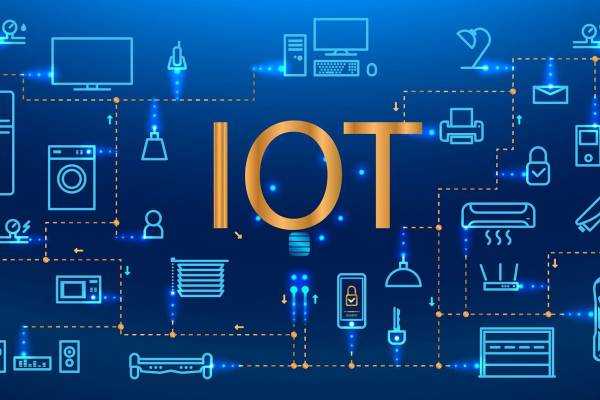
Objective: The Certified IoT Professional course aims to provide participants with comprehensive knowledge and hands-on skills in the Internet of Things ecosystem. This includes understanding IoT architecture, sensor technologies, connectivity protocols, data analytics, cloud integration, and security challenges. The course covers how to develop and manage scalable IoT solutions that enable real-time data collection, processing, and automation across various industries such as manufacturing, healthcare, smart cities, and agriculture.
Duration: Three Month.
 How to Enroll and Get Certified in Your Chosen Course:
 Step 1: Choose the course you wish to get certified in.
Step 2: Click on the “Enroll Now” button.
Step 3: Proceed with the enrollment process.
Step 4: Enter your billing details and continue to course fee payment.
Step 5: You will be redirected to the payment gateway. Pay the course and exam fee using one of the following methods:
Debit/Credit Card, Wallet, Paytm, Net Banking, UPI, or Google Pay.
Step 6: After successful payment, you will receive your study material login ID and password via email within 48 hours of fee payment.
Step 7: Once you complete the course, take the online examination.
Step 8: Upon passing the examination, you will receive:
• A soft copy (scanned) of your certificate via email within 7 days of examination.
• A hard copy (original with official seal and signature) sent to your address within 45 day of declaration of result.
Step 9: After certification, you will be offered job opportunities aligned with your area of interest.
Online Examination Detail:
Duration- 60 minutes.
No. of Questions- 30. (Multiple Choice Questions).
Maximum Marks- 100, Passing Marks- 40%.
There is no negative marking in this module.
| Marking System: | ||||||
| S.No. | No. of Questions | Marks Each Question | Total Marks | |||
| 1 | 10 | 5 | 50 | |||
| 2 | 5 | 4 | 20 | |||
| 3 | 5 | 3 | 15 | |||
| 4 | 5 | 2 | 10 | |||
| 5 | 5 | 1 | 5 | |||
| 30 | 100 | |||||
| How Students will be Graded: | ||||||
| S.No. | Marks | Grade | ||||
| 1 | 91-100 | O (Outstanding) | ||||
| 2 | 81-90 | A+ (Excellent) | ||||
| 3 | 71-80 | A (Very Good) | ||||
| 4 | 61-70 | B (Good) | ||||
| 5 | 51-60 | C (Average) | ||||
| 6 | 40-50 | P (Pass) | ||||
| 7 | 0-40 | F (Fail) | ||||
 Key Benefits of Certification- Earning a professional certification not only validates your skills but also enhances your employability. Here are the major benefits you gain:
 Practical, Job-Ready Skills – Our certifications are designed to equip you with real-world, hands-on skills that match current industry demands — helping you become employment-ready from day one.
 Lifetime Validity – Your certification is valid for a lifetime — no renewals or expirations. It serves as a permanent proof of your skills and training.
 Lifetime Certificate Verification – Employers and institutions can verify your certification anytime through a secure and reliable verification system — adding credibility to your qualifications.
 Industry-Aligned Certification –All certifications are developed in consultation with industry experts to ensure that what you learn is current, relevant, and aligned with market needs.
 Preferred by Employers – Candidates from ISO-certified institutes are often prioritized by recruiters due to their exposure to standardized, high-quality training.
 Free Job Assistance Based on Your Career Interests – Receive personalized job assistance and career guidance in your preferred domain, helping you land the right role faster.
Assessment Modules:
Module 1: Introduction to Internet of Things (IoT): Definition and evolution of IoT, Key components and architecture of IoT systems, IoT communication models, IoT applications across industries, Challenges and opportunities in IoT, IoT standards and protocols overview.
Module 2: IoT Hardware and Devices: Types of IoT devices and sensors, Microcontrollers and embedded systems, Actuators and connectivity modules, Power management in IoT devices, Device interfacing and communication, Hardware selection criteria for IoT projects.
Module 3: Networking and Communication Protocols: IoT network architectures, Communication protocols (MQTT, CoAP, HTTP, LoRaWAN, NB-IoT), Wireless technologies for IoT (Wi-Fi, Bluetooth, Zigbee), Network security essentials, Edge and fog computing concepts, Protocol selection based on use cases.
Module 4: IoT Data Management and Analytics: Data collection and preprocessing, Cloud platforms for IoT data storage, Real-time data processing and analytics, Big Data integration with IoT, Machine learning applications in IoT, Data visualization and reporting tools.
Module 5: IoT Security and Privacy: Common security threats in IoT, Device authentication and authorization, Data encryption and secure communication, Security frameworks and best practices, Privacy concerns and regulations, Incident detection and response.
Module 6: IoT Application Development and Deployment: IoT software development lifecycle, IoT platforms and SDKs, Application programming and APIs, Integration with cloud and enterprise systems, Deployment and scaling of IoT solutions, Case studies and real-world project examples.
Career Options After Certificate in IoT Professional (India)
1. IoT Engineer
Role & Responsibilities
-
Design, develop, and deploy IoT solutions
-
Integrate sensors, devices, and embedded systems
-
Develop firmware and device communication protocols
-
Monitor and maintain IoT systems
Industries
Smart manufacturing, automotive, healthcare, smart cities, IT firms
Salary Range
-
Entry level: ₹4 – ₹7 LPA
-
Experienced: ₹8 – ₹15 LPA
2. Embedded Systems Engineer (IoT)
Role & Responsibilities
-
Develop embedded software for IoT devices
-
Interface microcontrollers with sensors and actuators
-
Optimize device performance and power consumption
-
Test and debug hardware-software integration
Industries
Electronics, automotive, industrial automation
Salary Range
-
₹5 – ₹12 LPA
3. IoT Solution Architect
Role & Responsibilities
-
Design end-to-end IoT architectures
-
Select hardware, communication protocols, and cloud platforms
-
Ensure scalability, security, and reliability
-
Guide implementation teams
Industries
Large enterprises, system integrators, cloud companies
Salary Range
-
₹12 – ₹25 LPA
4. Industrial IoT (IIoT) Specialist
Role & Responsibilities
-
Implement IoT solutions for manufacturing and industrial environments
-
Monitor equipment performance and predictive maintenance
-
Improve operational efficiency through sensor data
Industries
Manufacturing, energy, oil & gas, utilities
Salary Range
-
₹6 – ₹14 LPA
5. IoT Data Analyst
Role & Responsibilities
-
Analyze data generated by IoT devices
-
Build dashboards and real-time analytics
-
Support decision-making using sensor data
Industries
Smart infrastructure, logistics, healthcare
Salary Range
-
₹6 – ₹12 LPA
6. IoT Security Analyst
Role & Responsibilities
-
Secure IoT devices and networks
-
Implement authentication, encryption, and access control
-
Monitor threats and vulnerabilities in IoT ecosystems
Industries
Cybersecurity firms, telecom, smart infrastructure
Salary Range
-
₹7 – ₹16 LPA
7. Smart Systems / Automation Engineer
Role & Responsibilities
-
Develop automation and smart control systems
-
Integrate IoT with AI, robotics, and cloud platforms
-
Support digital transformation initiatives
Industries
Smart homes, smart factories, building automation
Salary Range
-
₹5 – ₹12 LPA
8. IoT Consultant / Entrepreneur
Role & Responsibilities
-
Provide IoT consulting and implementation services
-
Build IoT startups or smart product solutions
-
Customize IoT platforms for clients
Earning Potential
-
₹50,000 – ₹3,00,000+ per month (project-based)
Industry Demand in India
IoT professionals are in demand across:
-
Smart Cities & Infrastructure Projects
-
Manufacturing & Industrial Automation
-
Automotive & Electric Vehicles
-
Healthcare & Wearable Technology
-
Energy, Utilities & Smart Grids
-
Agriculture & Agri-Tech
Career Growth Path
-
Entry Level: IoT Technician, Junior IoT Engineer
-
Mid Level: IoT Engineer, IIoT Specialist, Embedded Engineer
-
Senior Level: IoT Architect, Smart Systems Lead, CTO (IoT Startups)
Key Skills Gained from the Certification
-
IoT architecture & protocols (MQTT, CoAP, HTTP)
-
Embedded systems & sensor integration
-
Cloud platforms & data analytics
-
IoT security fundamentals
-
Real-time monitoring & automation
Key Takeaway
The Certificate in IoT Professional equips learners with future-ready skills for India’s rapidly growing smart technology ecosystem. With applications across multiple industries, IoT professionals enjoy strong job demand, competitive salaries, and entrepreneurial opportunities.