
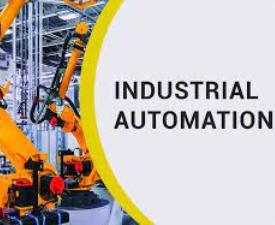
Description
Course Name: Certificate in Industrial Automation
Course Id: CIIA/Q0001
Eligibility: 10th Grade(High School) or Equivalent.
Objective: The Certificate in Industrial Automation is a professional course designed to equip individuals with the skills required to work with automation systems used in various industries, such as manufacturing, automotive, and energy. The course focuses on the principles and practices of automation technologies, including robotics, control systems, and industrial machinery. It is ideal for those interested in pursuing a career in the automation and manufacturing industries.
Duration: Two Month.
 How to Enroll and Get Certified in Your Chosen Course:
Step 1: Choose the course you wish to get certified in.
Step 2: Click on the “Enroll Now” button.
Step 3: Proceed with the enrollment process.
Step 4: Enter your billing details and continue to course fee payment.
Step 5: You will be redirected to the payment gateway. Pay the course and exam fee using one of the following methods:
Debit/Credit Card, Wallet, Paytm, Net Banking, UPI, or Google Pay.
Step 6: After successful payment, you will receive your study material login ID and password via email within 48 hours of fee payment.
Step 7: Once you complete the course, take the online examination.
Step 8: Upon passing the examination, you will receive:
• A soft copy (scanned) of your certificate via email within 7 days of examination.
• A hard copy (original with official seal and signature) sent to your address within 45 day of declaration of result.
Step 9: After certification, you will be offered job opportunities aligned with your area of interest.
Online Examination Detail:
Duration- 60 minutes.
No. of Questions- 30. (Multiple Choice Questions).
Maximum Marks- 100, Passing Marks- 40%.
There is no negative marking in this module.
| Marking System: | ||||||
| S.No. | No. of Questions | Marks Each Question | Total Marks | |||
| 1 | 10 | 5 | 50 | |||
| 2 | 5 | 4 | 20 | |||
| 3 | 5 | 3 | 15 | |||
| 4 | 5 | 2 | 10 | |||
| 5 | 5 | 1 | 5 | |||
| 30 | 100 | |||||
| How Students will be Graded: | ||||||
| S.No. | Marks | Grade | ||||
| 1 | 91-100 | O (Outstanding) | ||||
| 2 | 81-90 | A+ (Excellent) | ||||
| 3 | 71-80 | A (Very Good) | ||||
| 4 | 61-70 | B (Good) | ||||
| 5 | 51-60 | C (Average) | ||||
| 6 | 40-50 | P (Pass) | ||||
| 7 | 0-40 | F (Fail) | ||||
Key Benefits of Certification- Earning a professional certification not only validates your skills but also enhances your employability. Here are the major benefits you gain:
Practical, Job-Ready Skills – Our certifications are designed to equip you with real-world, hands-on skills that match current industry demands — helping you become employment-ready from day one.
Lifetime Validity – Your certification is valid for a lifetime — no renewals or expirations. It serves as a permanent proof of your skills and training.
Lifetime Certificate Verification – Employers and institutions can verify your certification anytime through a secure and reliable verification system — adding credibility to your qualifications.
Industry-Aligned Certification –All certifications are developed in consultation with industry experts to ensure that what you learn is current, relevant, and aligned with market needs.
Preferred by Employers – Candidates from ISO-certified institutes are often prioritized by recruiters due to their exposure to standardized, high-quality training.
Free Job Assistance Based on Your Career Interests – Receive personalized job assistance and career guidance in your preferred domain, helping you land the right role faster.
Syllabus:-
Basics of Industrial Automation: Introduction to industrial automation, Types of automation systems, Role of automation in industry, Basic electrical and electronic concepts, Industrial control systems, Sensors and transducers, Signal conditioning, Pneumatics and hydraulics basics, Safety in automation, Industrial communication protocols.
Programmable Logic Controllers (PLC): Introduction to PLC, PLC architecture and working, Programming languages (Ladder, FBD), PLC wiring and connection, Basic logic gates and Boolean algebra, Timer and counter instructions, Analog and digital I/O, Troubleshooting PLCs, Hands-on with leading PLC brands (Siemens, Allen Bradley), PLC project design.
Human Machine Interface (HMI) and SCADA Systems: Introduction to HMI, HMI design and development, SCADA basics and architecture, Data acquisition systems, SCADA software platforms (e.g., Wonderware, WinCC), Alarms and event logging, Communication with PLC, Historical data logging, Remote monitoring and control, Industrial SCADA applications.
Electrical Drives and Motors: Introduction to electrical drives, Types of motors (AC, DC, stepper, servo), Motor control circuits, Variable Frequency Drives (VFDs), Motor starting methods, Drive configuration and programming, Motor protection and troubleshooting, Synchronization of drives, Application of drives in automation, Energy efficiency in motor control.
Industrial Robotics and Motion Control: Introduction to industrial robotics, Types of robots and their configurations, End effectors and actuators, Basics of robot programming, Coordinate systems, Robot safety and maintenance, Robotic applications in manufacturing, Motion control concepts, Servo systems, Interfacing robots with PLC/HMI.
Project Integration and Automation System Design: System integration approach, Designing automated solutions, Wiring and panel design, Selection of components and devices, Troubleshooting techniques, Preventive maintenance planning, Documentation and SOPs, Industrial case studies, Industry 4.0 and IIoT overview, Final project and assessment.
Completing a Certificate in Industrial Automation provides graduates with specialized skills in automating industrial processes using technologies like PLC (Programmable Logic Controllers), SCADA, HMI, VFD, DCS, sensors, and robotics. With India’s growing focus on Industry 4.0, smart manufacturing, and digital factories, skilled automation professionals are in high demand.
✅ Career Options After Certificate in Industrial Automation
1. PLC Programmer / Automation Engineer
-
Role: Develop, test, and maintain PLC programs for automated machinery and industrial equipment.
-
Industries: Automotive, manufacturing, FMCG, oil & gas.
-
Salary Range: ₹3 – ₹6.5 lakh per annum
2. SCADA Operator / Engineer
-
Role: Design, configure, and monitor SCADA systems to control industrial processes remotely.
-
Industries: Energy, water treatment plants, process industries.
-
Salary Range: ₹3.5 – ₹7 lakh per annum
3. Maintenance Engineer (Automation)
-
Role: Troubleshoot and maintain automated machines, robotics, and control panels.
-
Industries: FMCG, pharma, steel, packaging.
-
Salary Range: ₹2.5 – ₹5.5 lakh per annum
4. Control Systems Engineer
-
Role: Design and integrate automation systems including sensors, actuators, controllers, and feedback mechanisms.
-
Industries: Engineering services, process control.
-
Salary Range: ₹4 – ₹8 lakh per annum
5. Instrumentation Engineer
-
Role: Install and maintain instruments and sensors that control and monitor machinery performance.
-
Industries: Oil & gas, power plants, chemical plants.
-
Salary Range: ₹3.5 – ₹7 lakh per annum
6. Field Service Engineer
-
Role: Travel to client sites to install, calibrate, or repair automation equipment and software.
-
Industries: Automation solution providers, OEMs.
-
Salary Range: ₹2.5 – ₹6 lakh per annum
7. Automation Sales Engineer
-
Role: Promote automation products and solutions, provide technical support to customers, and close B2B deals.
-
Industries: Automation hardware/software providers (e.g., Siemens, ABB).
-
Salary Range: ₹3 – ₹6.5 lakh per annum (plus incentives)
8. Entrepreneur / Automation Consultant
-
Role: Start your own business offering automation services, system integration, or training.
-
Industries: Manufacturing SMEs, training institutes, energy.
-
Earnings Potential: ₹5 – ₹20+ lakh per annum (profit-based)
📊 Summary Table: Career Roles & Salary Range in India
| Job Role | Salary Range (₹ per annum) |
|---|---|
| PLC Programmer / Automation Engineer | ₹3 – ₹6.5 Lakh |
| SCADA Engineer | ₹3.5 – ₹7 Lakh |
| Maintenance Engineer (Automation) | ₹2.5 – ₹5.5 Lakh |
| Control Systems Engineer | ₹4 – ₹8 Lakh |
| Instrumentation Engineer | ₹3.5 – ₹7 Lakh |
| Field Service Engineer | ₹2.5 – ₹6 Lakh |
| Automation Sales Engineer | ₹3 – ₹6.5 Lakh + Incentives |
| Entrepreneur / Consultant | ₹5 – ₹20+ Lakh (profit-based) |
🧠 In-Demand Skills
-
PLC programming (Siemens, Allen-Bradley, Schneider)
-
SCADA/HMI configuration (Wonderware, WinCC, iFIX)
-
Electrical panel design & wiring
-
Knowledge of VFDs, sensors, actuators
-
Troubleshooting industrial automation systems
🏢 Top Employers & Sectors
-
Siemens, ABB, Rockwell Automation, Schneider Electric
-
Tata Motors, L&T, BHEL, Bosch
-
Oil & gas companies, pharma plants, energy utilities
-
System integrators and automation consultancies
📌 Industry Outlook
-
Rapid adoption of Industry 4.0 and Smart Manufacturing
-
Automation demand in sectors like EV, food processing, and logistics
-
Government push for industrial modernization and robotics
