
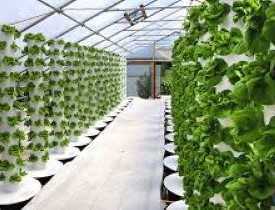
Description
Course Name: Certificate in Hydroponics
Course Id: CIH/Q0001.
Eligibility: 10th Grade (high school) or Equivalent.
Duration: Two Month.
Objective: The Certificate in Hydroponics course is designed to introduce learners to the science and practice of soilless farming using nutrient-rich water solutions. It equips participants with the knowledge and practical skills to cultivate crops efficiently using hydroponic systems, promoting sustainable agriculture and enabling modern farming techniques for commercial and domestic applications.
 How to Enroll and Get Certified in Your Chosen Course:
Step 1: Choose the course you wish to get certified in.
Step 2: Click on the “Enroll Now” button.
Step 3: Proceed with the enrollment process.
Step 4: Enter your billing details and continue to course fee payment.
Step 5: You will be redirected to the payment gateway. Pay the course and exam fee using one of the following methods:
Debit/Credit Card, Wallet, Paytm, Net Banking, UPI, or Google Pay.
Step 6: After successful payment, you will receive your study material login ID and password via email within 48 hours of fee payment.
Step 7: Once you complete the course, take the online examination.
Step 8: Upon passing the examination, you will receive:
• A soft copy (scanned) of your certificate via email within 7 days of examination.
• A hard copy (original with official seal and signature) sent to your address within 45 day of declaration of result.
Step 9: After certification, you will be offered job opportunities aligned with your area of interest.
Online Examination Detail:
Duration- 60 minutes.
No. of Questions- 30. (Multiple Choice Questions).
Maximum Marks- 100, Passing Marks- 40%.
There is no negative marking in this module.
| Marking System: | ||||||
| S.No. | No. of Questions | Marks Each Question | Total Marks | |||
| 1 | 10 | 5 | 50 | |||
| 2 | 5 | 4 | 20 | |||
| 3 | 5 | 3 | 15 | |||
| 4 | 5 | 2 | 10 | |||
| 5 | 5 | 1 | 5 | |||
| 30 | 100 | |||||
| How Students will be Graded: | ||||||
| S.No. | Marks | Grade | ||||
| 1 | 91-100 | O (Outstanding) | ||||
| 2 | 81-90 | A+ (Excellent) | ||||
| 3 | 71-80 | A (Very Good) | ||||
| 4 | 61-70 | B (Good) | ||||
| 5 | 51-60 | C (Average) | ||||
| 6 | 40-50 | P (Pass) | ||||
| 7 | 0-40 | F (Fail) | ||||
Key Benefits of Certification- Earning a professional certification not only validates your skills but also enhances your employability. Here are the major benefits you gain:
Practical, Job-Ready Skills – Our certifications are designed to equip you with real-world, hands-on skills that match current industry demands — helping you become employment-ready from day one.
Lifetime Validity – Your certification is valid for a lifetime — no renewals or expirations. It serves as a permanent proof of your skills and training.
Lifetime Certificate Verification – Employers and institutions can verify your certification anytime through a secure and reliable verification system — adding credibility to your qualifications.
Industry-Aligned Certification –All certifications are developed in consultation with industry experts to ensure that what you learn is current, relevant, and aligned with market needs.
Preferred by Employers – Candidates from ISO-certified institutes are often prioritized by recruiters due to their exposure to standardized, high-quality training.
Free Job Assistance Based on Your Career Interests – Receive personalized job assistance and career guidance in your preferred domain, helping you land the right role faster.
Syllabus
Introduction to Hydroponics: Definition and history of hydroponics, Advantages and disadvantages of hydroponic farming, Comparison between hydroponics and traditional soil farming, Types of hydroponic systems (NFT, DWC, Aeroponics, etc.), Basic plant biology and nutrient needs, Water and energy efficiency in hydroponics, Global trends and success stories, Key terminologies in hydroponics, Common crops grown in hydroponics, Overview of commercial hydroponic farming.
Types of Hydroponic Systems: Nutrient Film Technique (NFT), Deep Water Culture (DWC), Ebb and Flow System, Wick System, Aeroponics, Drip Irrigation System, Vertical Hydroponics, Aquaponics overview, Pros and cons of each system, Selection criteria based on crops and space.
Growing Media and Nutrients: Introduction to growing media (Cocopeat, Rockwool, Perlite, Vermiculite, etc.), Properties and usage of each media, Nutrient solution composition, Macro and micronutrients for plants, Preparation and storage of nutrient solutions, pH and EC management, Nutrient deficiencies and toxicities, Organic vs. synthetic nutrients, Nutrient dosing and automation, Monitoring tools for nutrients.
Environment Control and System Setup: Greenhouse structure and design basics, Lighting requirements (natural vs. artificial), Temperature and humidity control, Ventilation systems, Water quality and filtration, Pumps, timers and plumbing essentials, Space optimization and layout planning, Safety and hygiene in system setup, Automation and IoT in hydroponics, Troubleshooting system issues.
Crop Management and Protection: Seed selection and germination techniques, Transplanting and plant spacing, Crop cycle planning and scheduling, Pruning and training techniques, Pollination in controlled environments, Pest and disease identification, Biological and organic pest control methods, Integrated Pest Management (IPM), Harvesting techniques and timing, Post-harvest handling and packaging.
Business and Marketing in Hydroponics: Cost analysis and ROI calculation, Sourcing materials and inputs, Setting up a small-scale vs. commercial farm, Branding and packaging of produce, Marketing channels (retail, online, B2B), Certification and compliance (FSSAI, organic tags), Government schemes and subsidies, Case studies of successful hydroponic ventures, Record keeping and farm management software, Future opportunities in urban and peri-urban hydroponics.
Job Opportunities after completion of Certificate in Hydroponics course:
Graduates of the Certificate in Hydroponics program are trained in the science of growing plants without soil, using nutrient-rich water solutions. Hydroponics is becoming increasingly popular in India due to its efficient use of water, land, and resources, especially in urban settings and areas with poor soil quality. As the demand for sustainable and high-yield agricultural practices grows, hydroponics graduates have a wide range of career options in both agriculture and technology. Below are some career options with salary ranges in India:
1. Hydroponics Farm Manager
Role: Oversee the operations of a hydroponic farm, managing crop production, staff, and the maintenance of hydroponic systems. Salary Range: ₹4,00,000 – ₹8,00,000 per year
2. Hydroponic System Designer
Role: Design and build hydroponic systems for farms, greenhouses, and commercial growers. This includes selecting the right materials, technology, and methods for efficient plant growth. Salary Range: ₹5,00,000 – ₹12,00,000 per year
3. Hydroponic Technician
Role: Maintain, troubleshoot, and repair hydroponic systems, ensuring that the nutrient solution, pH levels, and water supply are optimal for plant growth. Salary Range: ₹3,00,000 – ₹6,00,000 per year
4. Hydroponic Crop Specialist
Role: Specialize in growing specific crops using hydroponic techniques. This could involve researching best practices for crop selection, yield optimization, and pest management. Salary Range: ₹4,00,000 – ₹9,00,000 per year
5. Agricultural Consultant (Hydroponics)
Role: Provide consultancy services to businesses and individuals looking to start or optimize hydroponic farming operations. Salary Range: ₹5,00,000 – ₹10,00,000 per year
6. Urban Farming Expert
Role: Specialize in setting up hydroponic systems in urban environments, helping cities create sustainable, local food sources, particularly for homes, schools, and small businesses. Salary Range: ₹4,00,000 – ₹8,00,000 per year
7. Hydroponic Researcher
Role: Conduct research in the field of hydroponics to improve plant growth techniques, nutrient solutions, and system efficiency. Often work in agricultural universities, research labs, or start-up companies. Salary Range: ₹5,00,000 – ₹12,00,000 per year
8. Greenhouse Manager
Role: Manage a greenhouse that uses hydroponic systems for growing vegetables, fruits, or herbs. The role involves overseeing the environment, maintaining hydroponic systems, and ensuring proper cultivation methods. Salary Range: ₹4,00,000 – ₹8,00,000 per year
9. Entrepreneur (Hydroponic Farming Business)
Role: Start and run a hydroponic farming business, growing and selling produce in urban markets, to restaurants, or through direct-to-consumer platforms. Salary Range: ₹5,00,000 – ₹15,00,000 per year (depending on business scale)
10. Hydroponic Farm Sales Manager
Role: Manage sales and marketing for companies that sell hydroponic systems, equipment, and supplies. This could include B2B sales to large commercial farms or retail sales to smaller, hobbyist farmers. Salary Range: ₹4,00,000 – ₹10,00,000 per year
11. Hydroponics Educator/Trainer
Role: Teach hydroponics to students, aspiring farmers, or professionals through workshops, courses, and seminars, either in educational institutions or as part of private training programs. Salary Range: ₹3,50,000 – ₹8,00,000 per year
12. Aquaponics Specialist
Role: Similar to hydroponics, but integrates fish farming with plant cultivation, where waste from fish provides nutrients for plants. This is a more advanced system of sustainable farming. Salary Range: ₹4,50,000 – ₹9,00,000 per year
13. Crop Yield Analyst (Hydroponics)
Role: Analyze crop yields and productivity in hydroponic systems, providing insights on how to improve growth efficiency and profitability. Salary Range: ₹4,00,000 – ₹8,00,000 per year
14. Hydroponic Supply Chain Manager
Role: Oversee the supply chain for hydroponic farms, including sourcing raw materials (e.g., nutrient solutions, growing mediums, systems), logistics, and delivery. Salary Range: ₹5,00,000 – ₹12,00,000 per year
15. Agricultural Technology Developer (Hydroponics)
Role: Work with tech companies to develop software and automation solutions that optimize the management and monitoring of hydroponic systems. Salary Range: ₹6,00,000 – ₹15,00,000 per year
16. Hydroponic Farm Planner
Role: Plan and design hydroponic farm layouts for optimal crop production, efficient water and nutrient use, and space utilization. Salary Range: ₹4,50,000 – ₹8,00,000 per year
17. Hydroponic Marketing Manager
Role: Manage the marketing and branding for companies in the hydroponics industry, including product launches, campaigns, and building awareness about hydroponic farming. Salary Range: ₹5,00,000 – ₹10,00,000 per year
18. Hydroponic Nutritionist
Role: Specialize in formulating and advising on the correct nutrient solutions and supplements required for the optimal growth of plants in hydroponic systems. Salary Range: ₹5,00,000 – ₹10,00,000 per year
19. Sustainability Consultant (Hydroponics)
Role: Advise organizations, businesses, and governments on implementing hydroponic farming practices as part of their sustainability efforts to reduce water use and improve food security. Salary Range: ₹6,00,000 – ₹15,00,000 per year
20. Hydroponic Farm Operations Supervisor
Role: Supervise day-to-day activities of a hydroponic farm, ensuring the system operates efficiently and all tasks related to planting, harvesting, and maintenance are completed. Salary Range: ₹4,00,000 – ₹7,00,000 per year
Factors Influencing Salary:
- Experience: Professionals with several years of experience or specialized skills in hydroponics or related technologies tend to earn more.
- Location: Urban areas, especially in cities with growing interest in sustainable agriculture like Bengaluru, Pune, Hyderabad, and Delhi, offer better-paying opportunities.
- Specialization: Specialists in areas like aquaponics, crop yield optimization, or system design often earn more due to their expertise.
- Business Size: Entrepreneurs or professionals working with large organizations or successful businesses generally earn higher salaries.
Career Growth Path:
- Entry-Level Roles: Hydroponic Technician, Hydroponic Farm Worker, Junior Farm Manager
- Mid-Level Roles: Hydroponic Farm Manager, Hydroponic System Designer, Agricultural Consultant
- Advanced Roles: Hydroponic Entrepreneur, Senior Agricultural Technology Developer, Sustainability Consultant
Industry Trends:
Hydroponics is a growing industry in India due to increasing urbanization, limited land availability, and a push for sustainable agriculture practices. Government support for organic farming and sustainable agriculture, coupled with advancements in agricultural technology, has opened doors for hydroponics specialists. Additionally, as the demand for locally grown, pesticide-free produce rises, hydroponics will continue to be a crucial part of modern agriculture in India.
Graduates of a Certificate in Hydroponics program can expect to find ample opportunities in both urban and rural areas as the demand for innovative and sustainable farming methods continues to increase.
