Description
Certification Name: Certificate in Folk Artist
Course Id: CFA/Q0001.
Eligibility: 10+2 (higher Secondary) or Equivalent.
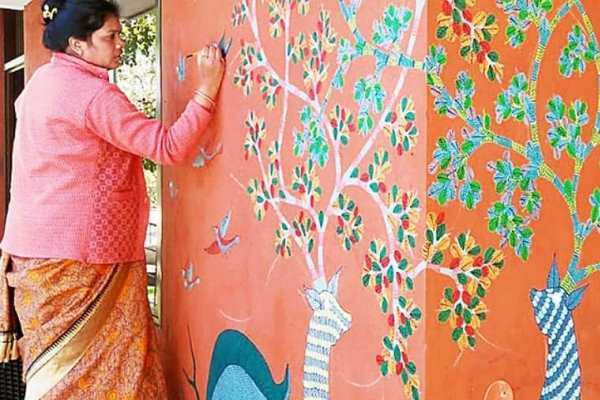
Objective: The Certified Folk Artist course aims to equip learners with a deep understanding of traditional folk art forms, their cultural significance, and techniques. The course focuses on preserving and promoting indigenous art by teaching practical skills, historical context, and the ability to create authentic folk art pieces. It also encourages creativity while respecting cultural heritage, enabling artists to contribute to sustaining folk traditions and enhancing their artistic proficiency for professional opportunities.
Duration: Three Month.
 How to Enroll and Get Certified in Your Chosen Course:
 Step 1: Choose the course you wish to get certified in.
Step 2: Click on the “Enroll Now” button.
Step 3: Proceed with the enrollment process.
Step 4: Enter your billing details and continue to course fee payment.
Step 5: You will be redirected to the payment gateway. Pay the course and exam fee using one of the following methods:
Debit/Credit Card, Wallet, Paytm, Net Banking, UPI, or Google Pay.
Step 6: After successful payment, you will receive your study material login ID and password via email within 48 hours of fee payment.
Step 7: Once you complete the course, take the online examination.
Step 8: Upon passing the examination, you will receive:
• A soft copy (scanned) of your certificate via email within 7 days of examination.
• A hard copy (original with official seal and signature) sent to your address within 45 day of declaration of result.
Step 9: After certification, you will be offered job opportunities aligned with your area of interest.
Online Examination Detail:
Duration- 60 minutes.
No. of Questions- 30. (Multiple Choice Questions).
Maximum Marks- 100, Passing Marks- 40%.
There is no negative marking in this module.
| Marking System: | ||||||
| S.No. | No. of Questions | Marks Each Question | Total Marks | |||
| 1 | 10 | 5 | 50 | |||
| 2 | 5 | 4 | 20 | |||
| 3 | 5 | 3 | 15 | |||
| 4 | 5 | 2 | 10 | |||
| 5 | 5 | 1 | 5 | |||
| 30 | 100 | |||||
| How Students will be Graded: | ||||||
| S.No. | Marks | Grade | ||||
| 1 | 91-100 | O (Outstanding) | ||||
| 2 | 81-90 | A+ (Excellent) | ||||
| 3 | 71-80 | A (Very Good) | ||||
| 4 | 61-70 | B (Good) | ||||
| 5 | 51-60 | C (Average) | ||||
| 6 | 40-50 | P (Pass) | ||||
| 7 | 0-40 | F (Fail) | ||||
 Key Benefits of Certification- Earning a professional certification not only validates your skills but also enhances your employability. Here are the major benefits you gain:
 Practical, Job-Ready Skills – Our certifications are designed to equip you with real-world, hands-on skills that match current industry demands — helping you become employment-ready from day one.
 Lifetime Validity – Your certification is valid for a lifetime — no renewals or expirations. It serves as a permanent proof of your skills and training.
 Lifetime Certificate Verification – Employers and institutions can verify your certification anytime through a secure and reliable verification system — adding credibility to your qualifications.
 Industry-Aligned Certification –All certifications are developed in consultation with industry experts to ensure that what you learn is current, relevant, and aligned with market needs.
 Preferred by Employers – Candidates from ISO-certified institutes are often prioritized by recruiters due to their exposure to standardized, high-quality training.
 Free Job Assistance Based on Your Career Interests – Receive personalized job assistance and career guidance in your preferred domain, helping you land the right role faster.
Assessment Modules:
Module 1: Introduction to Folk Art: Definition and Characteristics of Folk Art, History and Evolution of Folk Art, Importance of Folk Art in Culture, Types of Folk Art Forms, Regional Variations in Folk Art, Role of Folk Artists in Society.
Module 2: Traditional Materials and Tools: Natural and Locally Sourced Materials, Tools Used in Folk Art Creation, Preparation Techniques of Materials, Preservation of Traditional Techniques, Sustainable Practices in Folk Art, Innovations in Material Usage.
Module 3: Techniques and Styles in Folk Art: Painting Techniques in Folk Art, Textile and Embroidery Methods, Woodcraft and Carving Techniques, Pottery and Clay Modeling, Folk Dance and Performance Art, Storytelling and Oral Traditions.
Module 4: Major Folk Art Forms of India: Madhubani Painting, Warli Art, Pattachitra, Kalamkari, Gond Art, Tanjore Painting.
Module 5: Contemporary Relevance and Promotion: Challenges Faced by Folk Artists, Role of Government and NGOs, Marketing and Selling Folk Art, Use of Digital Media for Promotion, Workshops and Exhibitions, Building a Career as a Folk Artist.
Module 6: Practical Applications and Project Work: Hands-on Creation of Folk Art, Designing a Folk Art Piece, Collaborative Folk Art Project, Documentation of Folk Art Traditions, Presentation and Critique, Final Assessment and Certification.
🎓 Certificate in Folk Artist – Career Overview
After completing this certification, you can build a career in cultural institutions, art galleries, government art programs, handicraft exhibitions, tourism projects, and freelance creative work across India. Folk artists specialize in traditional, regional, and community-based art forms, preserving cultural heritage while creating contemporary opportunities.
🔝 Career Options & Salary Range (India)
-
Professional Folk Artist – ₹2,50,000 to ₹8,00,000 per year
-
Exhibition / Cultural Performer – ₹3,00,000 to ₹9,00,000 per year
-
Freelance Folk Artist / Workshop Trainer – ₹3,00,000 to ₹12,00,000+ per year (project-based)
-
Artisan / Folk Art Entrepreneur – ₹3,50,000 to ₹10,00,000 per year
-
Cultural Program Curator / Consultant – ₹4,00,000 to ₹12,00,000 per year
(Income varies depending on experience, region, clients, and scale of projects.)
🎯 Key Responsibilities
-
Creating traditional folk art or performances for exhibitions, events, and festivals
-
Preserving and promoting regional art styles and techniques
-
Conducting workshops and educational programs on folk art
-
Collaborating with cultural organizations, tourism boards, and galleries
-
Innovating traditional art forms for commercial or contemporary purposes
📈 Career Growth Path
Apprentice / Trainee → Folk Artist → Professional Performer / Trainer → Cultural Consultant / Entrepreneur → Freelance Specialist
Experienced professionals can perform nationally or internationally, collaborate with museums or NGOs, conduct workshops, sell artworks, or run folk art studios.
🧠 Skills That Increase Earning Potential
✔ Mastery of traditional techniques and styles
✔ Performance and storytelling skills
✔ Art workshop facilitation and teaching
✔ Networking with galleries, cultural institutions, and tourism projects
✔ Innovation and adaptation of folk art for modern markets