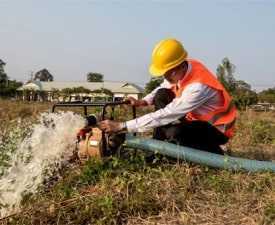
Description
Course Name: Certificate in Drip & Sprinkler Irrigation Technology
Course Id: CDSIT/Q0001.
Eligibility: Completion of 10th Grade (high School) or equivalent.
Objective: The Certificate in Drip & Sprinkler Irrigation Technology is an excellent choice for individuals looking to build a career in the growing agricultural sector, especially with the increasing importance of sustainable farming practices and water conservation. The skills learned in this diploma program are crucial in addressing global water scarcity issues and improving agricultural productivity.
Duration: Three Months.
 How to Enroll and Get Certified in Your Chosen Course:
 Step 1: Choose the course you wish to get certified in.
Step 2: Click on the “Enroll Now” button.
Step 3: Proceed with the enrollment process.
Step 4: Enter your billing details and continue to course fee payment.
Step 5: You will be redirected to the payment gateway. Pay the course and exam fee using one of the following methods:
Debit/Credit Card, Wallet, Paytm, Net Banking, UPI, or Google Pay.
Step 6: After successful payment, you will receive your study material login ID and password via email within 48 hours of fee payment.
Step 7: Once you complete the course, take the online examination.
Step 8: Upon passing the examination, you will receive:
• A soft copy (scanned) of your certificate via email within 7 days of examination.
• A hard copy (original with official seal and signature) sent to your address within 45 day of declaration of result.
Step 9: After certification, you will be offered job opportunities aligned with your area of interest.
Online Examination Detail:
Duration- 60 minutes.
No. of Questions- 30. (Multiple Choice Questions).
Maximum Marks- 100, Passing Marks- 40%.
There is no negative marking in this module.
| Marking System: | ||||||
| S.No. | No. of Questions | Marks Each Question | Total Marks | |||
| 1 | 10 | 5 | 50 | |||
| 2 | 5 | 4 | 20 | |||
| 3 | 5 | 3 | 15 | |||
| 4 | 5 | 2 | 10 | |||
| 5 | 5 | 1 | 5 | |||
| 30 | 100 | |||||
| How Students will be Graded: | ||||||
| S.No. | Marks | Grade | ||||
| 1 | 91-100 | O (Outstanding) | ||||
| 2 | 81-90 | A+ (Excellent) | ||||
| 3 | 71-80 | A (Very Good) | ||||
| 4 | 61-70 | B (Good) | ||||
| 5 | 51-60 | C (Average) | ||||
| 6 | 40-50 | P (Pass) | ||||
| 7 | 0-40 | F (Fail) | ||||
 Key Benefits of Certification- Earning a professional certification not only validates your skills but also enhances your employability. Here are the major benefits you gain:
 Practical, Job-Ready Skills – Our certifications are designed to equip you with real-world, hands-on skills that match current industry demands — helping you become employment-ready from day one.
 Lifetime Validity – Your certification is valid for a lifetime — no renewals or expirations. It serves as a permanent proof of your skills and training.
 Lifetime Certificate Verification – Employers and institutions can verify your certification anytime through a secure and reliable verification system — adding credibility to your qualifications.
 Industry-Aligned Certification –All certifications are developed in consultation with industry experts to ensure that what you learn is current, relevant, and aligned with market needs.
 Preferred by Employers – Candidates from ISO-certified institutes are often prioritized by recruiters due to their exposure to standardized, high-quality training.
 Free Job Assistance Based on Your Career Interests – Receive personalized job assistance and career guidance in your preferred domain, helping you land the right role faster.
Syllabus:
Introduction to Irrigation and Water Management: Importance of irrigation in agriculture, Types of irrigation systems, Overview of drip and sprinkler irrigation, Water cycle and sources of irrigation water, Water requirement of crops, Soil-water-plant relationship, Irrigation scheduling, Water use efficiency, Environmental impact of irrigation, Introduction to sustainable water management.
Basics of Drip Irrigation System: Components of drip irrigation system, Types of emitters and drip lines, Filtration units and their importance, Pumping systems for drip irrigation, Layout and design principles, Installation techniques, Maintenance of drip systems, Advantages and limitations of drip irrigation, Fertigation in drip irrigation, Troubleshooting common problems.
Basics of Sprinkler Irrigation System: Components of sprinkler irrigation system, Types of sprinklers and their selection, Design and layout of sprinkler systems, Pump selection and pressure requirements, Sprinkler spacing and overlap, Installation procedures, Maintenance and cleaning of sprinklers, Advantages and disadvantages of sprinkler irrigation, Use of sprinklers in different crops, Wind effects on sprinkler performance.
Design and Installation of Irrigation Systems: Site assessment and survey, Soil and topography considerations, Calculation of water requirements, Selection of system components, Pipe sizing and hydraulic calculations, Layout planning and mapping, Installation procedures and safety measures, Testing of installed systems, Cost estimation and budgeting, Preparation of project report.
Operation, Maintenance and Troubleshooting: Routine inspection and maintenance, Cleaning and flushing procedures, Detection of leaks and blockages, Replacement of damaged components, Calibration of irrigation systems, Preventive maintenance schedule, Common operational problems, Seasonal system management, Record keeping and data logging, Safety precautions during operation.
Government Policies, Subsidies and Entrepreneurship in Irrigation: Government schemes and subsidies for micro-irrigation, Application procedure for financial assistance, Policies related to water conservation, Standards and regulations for irrigation systems, Opportunities for entrepreneurship in irrigation services, Marketing of irrigation equipment, Role of NGOs and cooperatives, Training and certification programs, Challenges and opportunities in the sector, Case studies of successful irrigation projects.
Job Opportunities after completion of Certificate in Drip & Sprinkler Irrigation Technology course:
Graduates of the Certificate in Drip & Sprinkler Irrigation Technology program are well-equipped to work in the rapidly growing field of agriculture, specifically focusing on the efficient use of water resources in farming through micro irrigation systems. Micro irrigation techniques such as drip irrigation and sprinkler systems are essential in conserving water, improving crop yield, and ensuring sustainable farming practices. With India’s agricultural sector evolving towards water-efficient methods, this qualification offers vast career opportunities.
Here’s a detailed overview of the career options available to graduates of the Certificate in Drip & Sprinkler Irrigation Technology program in India, along with their respective salary ranges:
1. Micro Irrigation Technician
- Role: A Micro Irrigation Technician is responsible for installing, maintaining, and repairing drip irrigation and sprinkler systems. They ensure that the irrigation system is functioning efficiently, optimizing water usage for crops, and troubleshooting any technical issues related to the irrigation infrastructure.
- Workplaces: Agricultural companies, irrigation system suppliers, government projects, and agricultural cooperatives.
- Salary:
- Entry-level: ₹2.5–4 LPA
- Experienced: ₹5–7 LPA
- Senior-level: ₹8–12 LPA (for high-profile agricultural projects or large-scale farms)
2. Irrigation System Designer
- Role: An Irrigation System Designer specializes in planning and designing micro irrigation systems for farms and agricultural projects. They work closely with farmers, agronomists, and engineers to create efficient irrigation systems that meet the specific needs of the crops while conserving water.
- Workplaces: Irrigation companies, agricultural consultancies, large farms, and government bodies focusing on water management.
- Salary:
- Entry-level: ₹3–5 LPA
- Experienced: ₹6–9 LPA
- Senior-level: ₹12–15 LPA (for larger, high-value projects or multinational irrigation companies)
3. Agriculture Engineer (Irrigation Focus)
- Role: Agriculture engineers with a focus on irrigation work on designing and improving agricultural water management systems, including micro irrigation. They play a critical role in developing solutions for water efficiency, crop health, and yield improvement through proper irrigation techniques.
- Workplaces: Agricultural research centers, irrigation companies, government agencies, water conservation projects.
- Salary:
- Entry-level: ₹4–6 LPA
- Experienced: ₹8–12 LPA
- Senior-level: ₹15–25 LPA (especially with large agricultural firms or consultancy roles)
4. Irrigation Project Manager
- Role: Irrigation Project Managers oversee the planning, execution, and monitoring of large-scale irrigation projects, ensuring they are completed on time, within budget, and in accordance with environmental and technical specifications. They manage a team of technicians and engineers and liaise with clients.
- Workplaces: Irrigation companies, government projects, agricultural development agencies, large farming operations.
- Salary:
- Entry-level: ₹5–8 LPA
- Experienced: ₹10–15 LPA
- Senior-level: ₹20–30 LPA (for large projects and high-end agricultural enterprises)
5. Sales and Marketing Executive (Micro Irrigation Systems)
- Role: Sales and marketing executives in the micro irrigation industry are responsible for promoting irrigation products like drip and sprinkler systems. They work with farmers, agricultural companies, and government bodies to sell irrigation solutions, educate clients on water efficiency, and provide after-sales services.
- Workplaces: Irrigation equipment companies, agricultural product suppliers, rural sales agencies.
- Salary:
- Entry-level: ₹2.5–4 LPA (including commission)
- Experienced: ₹5–7 LPA
- Senior-level: ₹10–15 LPA (with performance-based incentives)
6. Irrigation Technician Trainer
- Role: After gaining experience, graduates can work as trainers, educating new technicians on the installation, maintenance, and repair of micro irrigation systems. They may work with agricultural training institutes, government programs, or private sector companies to provide training sessions.
- Workplaces: Agricultural training centers, private institutes, government training programs, agricultural extension services.
- Salary:
- Entry-level: ₹3–5 LPA
- Experienced: ₹6–8 LPA
- Senior-level: ₹10–12 LPA (for established training institutions or government programs)
7. Agricultural Water Management Consultant
- Role: Consultants in agricultural water management focus on advising farms and agricultural businesses on efficient water usage practices. They design customized irrigation systems, conduct water audits, and offer strategies to optimize the use of water for irrigation in line with sustainability goals.
- Workplaces: Agricultural consultancy firms, government advisory roles, NGOs focusing on water conservation, private consultancy.
- Salary:
- Entry-level: ₹4–6 LPA
- Experienced: ₹8–12 LPA
- Senior-level: ₹15–20 LPA (for large agricultural projects or corporate consultancy)
8. Farm Irrigation Specialist
- Role: Farm Irrigation Specialists are responsible for the ongoing maintenance and operation of irrigation systems on farms. They ensure systems are working optimally, troubleshoot issues, and provide advice on how to improve irrigation efficiency to maximize crop yield while conserving water.
- Workplaces: Large farms, cooperative farms, agricultural enterprises, organic farms, and horticulture businesses.
- Salary:
- Entry-level: ₹2.5–4 LPA
- Experienced: ₹5–7 LPA
- Senior-level: ₹8–10 LPA (depending on the size and type of farm)
9. Water Resource Management Specialist
- Role: A Water Resource Management Specialist focuses on managing water usage and ensuring sustainable practices in agriculture. They work on projects aimed at improving water use efficiency, such as the implementation of micro irrigation systems in regions facing water scarcity.
- Workplaces: Government agencies, NGOs working in rural development, agricultural consultancies, water management organizations.
- Salary:
- Entry-level: ₹4–6 LPA
- Experienced: ₹8–12 LPA
- Senior-level: ₹15–25 LPA (especially with large government or international water management projects)
10. Government or NGO Project Coordinator
- Role: Project Coordinators in government or NGO projects focused on agricultural development and water management work on the implementation of irrigation systems in rural or underserved areas. They oversee the installation of micro irrigation solutions, provide training to local farmers, and ensure the smooth functioning of government schemes.
- Workplaces: Government departments, non-governmental organizations (NGOs), rural development projects, international aid agencies.
- Salary:
- Entry-level: ₹3–5 LPA
- Experienced: ₹6–10 LPA
- Senior-level: ₹12–20 LPA (for large government or international projects)
11. Entrepreneur (Micro Irrigation Systems)
- Role: Graduates can also start their own businesses focused on the sale, installation, and maintenance of micro irrigation systems. They can serve a variety of clients, including individual farmers, agricultural cooperatives, and large-scale agricultural businesses, offering tailored irrigation solutions.
- Workplaces: Own business, start-up ventures, or rural agricultural services.
- Salary:
- Entry-level: ₹2.5–5 LPA (in the early stages of the business)
- Experienced: ₹7–10 LPA (with established clients)
- Senior-level: ₹12–20 LPA (for successful businesses with regular clientele)
Factors Affecting Salary
- Experience: Professionals with hands-on experience in installing and maintaining irrigation systems, especially in large agricultural projects, command higher salaries.
- Location: Salaries are often higher in regions with significant agricultural activity, such as Maharashtra, Punjab, Rajasthan, Uttar Pradesh, and Karnataka, where irrigation solutions are in high demand.
- Type of Employer: Working for large agricultural firms, multinational irrigation companies, or government water management agencies tends to come with higher salaries.
- Skillset and Certification: Graduates with additional certifications in water management, environmental engineering, or sustainable farming practices may command better pay.
Conclusion
The Certificate in Drip & Sprinkler Irrigation Technology program offers a broad range of career opportunities in India’s rapidly modernizing agricultural sector. With a focus on water conservation and the increasing demand for efficient irrigation techniques, professionals in this field can enjoy a rewarding career with a variety of roles, including technical positions, design work, consultancy, and management. The salary potential increases with experience, specialization, and the scale of the projects undertaken. The demand for skilled professionals in micro irrigation systems is set to grow, making this a promising field for long-term career growth.