Description
Course Name: Certificate in Applied Project Management
Course Id: CAPM/Q1001.
Eligibility: 10+2 Grade (Higher Secondary) or Equivalent.
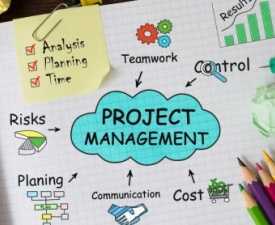
Objective: A Certificate in Applied Project Management is a professional course designed to provide individuals with the fundamental knowledge, skills, and tools required to plan, execute, and manage projects efficiently. This certification is ideal for aspiring project managers or professionals seeking to enhance their project management expertise.
Duration: Two Months.
 How to Enroll and Get Certified in Your Chosen Course:
 Step 1: Choose the course you wish to get certified in.
Step 2: Click on the “Enroll Now” button.
Step 3: Proceed with the enrollment process.
Step 4: Enter your billing details and continue to course fee payment.
Step 5: You will be redirected to the payment gateway. Pay the course and exam fee using one of the following methods:
Debit/Credit Card, Wallet, Paytm, Net Banking, UPI, or Google Pay.
Step 6: After successful payment, you will receive your study material login ID and password via email within 48 hours of fee payment.
Step 7: Once you complete the course, take the online examination.
Step 8: Upon passing the examination, you will receive:
• A soft copy (scanned) of your certificate via email within 7 days of examination.
• A hard copy (original with official seal and signature) sent to your address within 45 day of declaration of result.
Step 9: After certification, you will be offered job opportunities aligned with your area of interest.
Online Examination Detail:
Duration- 60 minutes.
No. of Questions- 30. (Multiple Choice Questions).
Maximum Marks- 100, Passing Marks- 40%.
There is no negative marking in this module.
| Marking System: | ||||||
| S.No. | No. of Questions | Marks Each Question | Total Marks | |||
| 1 | 10 | 5 | 50 | |||
| 2 | 5 | 4 | 20 | |||
| 3 | 5 | 3 | 15 | |||
| 4 | 5 | 2 | 10 | |||
| 5 | 5 | 1 | 5 | |||
| 30 | 100 | |||||
| How Students will be Graded: | ||||||
| S.No. | Marks | Grade | ||||
| 1 | 91-100 | O (Outstanding) | ||||
| 2 | 81-90 | A+ (Excellent) | ||||
| 3 | 71-80 | A (Very Good) | ||||
| 4 | 61-70 | B (Good) | ||||
| 5 | 51-60 | C (Average) | ||||
| 6 | 40-50 | P (Pass) | ||||
| 7 | 0-40 | F (Fail) | ||||
 Key Benefits of Certification- Earning a professional certification not only validates your skills but also enhances your employability. Here are the major benefits you gain:
 Practical, Job-Ready Skills – Our certifications are designed to equip you with real-world, hands-on skills that match current industry demands — helping you become employment-ready from day one.
 Lifetime Validity – Your certification is valid for a lifetime — no renewals or expirations. It serves as a permanent proof of your skills and training.
 Lifetime Certificate Verification – Employers and institutions can verify your certification anytime through a secure and reliable verification system — adding credibility to your qualifications.
 Industry-Aligned Certification –All certifications are developed in consultation with industry experts to ensure that what you learn is current, relevant, and aligned with market needs.
 Preferred by Employers – Candidates from ISO-certified institutes are often prioritized by recruiters due to their exposure to standardized, high-quality training.
 Free Job Assistance Based on Your Career Interests – Receive personalized job assistance and career guidance in your preferred domain, helping you land the right role faster.
Syllabus
Introduction to Project Management: Definition and importance of project management, Project lifecycle and phases, Role and responsibilities of a project manager, Key project management methodologies (Agile, Waterfall, PRINCE2), Difference between projects, programs, and portfolios, Project constraints (scope, time, cost, quality, risk, resources), Stakeholder identification and management, Project management knowledge areas (PMBOK framework), Project success and failure factors.
Project Planning and Scheduling: Importance of project planning, Developing a project charter, Work Breakdown Structure (WBS), Defining project scope and deliverables, Estimating time and resources, Creating a project schedule (Gantt charts, Critical Path Method), Setting project milestones, Using project management tools (MS Project, Trello, Asana), Managing dependencies and constraints, Communication planning in projects.
Project Cost and Budget Management: Principles of cost management, Budget estimation techniques, Cost-benefit analysis and return on investment (ROI), Allocating financial resources, Managing project expenses and cash flow, Earned value management (EVM), Contingency reserves and risk mitigation, Tracking and controlling project costs, Cost-cutting strategies without quality compromise.
Risk Management in Projects: Understanding project risks, Types of project risks (financial, operational, strategic, compliance), Risk identification techniques (SWOT, brainstorming, checklists), Qualitative and quantitative risk analysis, Risk prioritization and mitigation strategies, Creating a risk response plan, Monitoring and controlling risks, Managing uncertainty and crisis situations, Contingency planning.
Leadership and Team Management in Projects: Role of leadership in project success, Team formation and development (Tuckman’s model), Conflict resolution techniques, Motivating and engaging project teams, Effective delegation and decision-making, Communication skills for project managers, Virtual team management best practices, Performance evaluation and feedback, Handling difficult stakeholders,
Quality Management in Projects: Definition and importance of quality in projects, Quality assurance vs. quality control, Setting quality standards and metrics, Total Quality Management (TQM), Six Sigma and Lean principles, Quality audits and process improvement, Customer satisfaction measurement, Identifying defects and corrective actions, Documentation and compliance in quality management.
Job Opportunities after completion of Certificate in Applied Project Management course:
Career Opportunities After Completion of the Certificate in Certificate in Applied Project Management Program in India
The Certificate in Applied Project Management program equips individuals with the foundational skills to plan, execute, and manage projects across various industries. Graduates learn how to effectively allocate resources, meet deadlines, manage risks, and ensure project quality. These skills are applicable in diverse sectors, making this certification highly versatile.
1. Career Opportunities
a) Project Coordinator
- Role: Assisting project managers in planning, scheduling, and coordinating tasks.
- Workplaces: IT firms, construction companies, NGOs, and corporate offices.
- Salary: ₹2.5–5 LPA.
b) Junior Project Manager
- Role: Managing small-scale projects or assisting senior managers in larger projects.
- Workplaces: Software development firms, marketing agencies, and manufacturing units.
- Salary: ₹3–6 LPA.
c) Operations Assistant
- Role: Supporting operational workflows and ensuring project deliverables align with business goals.
- Workplaces: E-commerce, logistics, and supply chain companies.
- Salary: ₹2.5–4.5 LPA.
d) Risk Management Analyst
- Role: Identifying and mitigating risks associated with project execution.
- Workplaces: Financial institutions, IT companies, and consulting firms.
- Salary: ₹4–6 LPA.
e) Quality Assurance Coordinator
- Role: Monitoring project deliverables to ensure quality standards are met.
- Workplaces: Construction, manufacturing, and service industries.
- Salary: ₹3–5 LPA.
f) Freelancer/Consultant
- Role: Offering project management services to startups or small businesses on a contract basis.
- Workplaces: Freelance platforms, startups, and SMEs.
- Earnings: ₹30,000–80,000/month based on project scope and complexity.
g) Administrative Project Assistant
- Role: Handling administrative tasks related to project documentation and communication.
- Workplaces: Government organizations, MNCs, and NGOs.
- Salary: ₹2–4 LPA.
2. Industries That Value Project Management Skills
- Information Technology (IT): Software development, IT support projects, and ERP implementation.
- Construction: Building, infrastructure, and real estate projects.
- Manufacturing: Process optimization and new product development.
- Finance: Banking, investment, and risk management projects.
- Healthcare: Hospital management and healthcare service delivery.
- Marketing and Advertising: Campaign management and client projects.
- Government and NGOs: Public welfare programs and development projects.
3. Salary Range and Growth Potential
- Entry-level roles: ₹2.5–5 LPA.
- Mid-level roles (3–5 years of experience): ₹5–10 LPA.
- Senior roles (5+ years of experience): ₹10–20 LPA or higher, especially in IT and construction industries.
- Freelance consultants: Earnings range from ₹50,000–1,00,000/month based on project size.
4. Certifications for Career Enhancement
To enhance prospects, candidates may pursue additional certifications such as:
- CAPM (Certified Associate in Project Management) by PMI.
- PRINCE2 Foundation.
- Scrum Master Certification for agile project management.
5. Self-Employment Opportunities
Graduates can leverage their skills for freelance project management or consultancy roles, helping startups and SMEs execute projects efficiently. This is especially beneficial in industries like IT, event management, and marketing.
6. Key Skills for Career Advancement
- Proficiency in project management tools like MS Project, JIRA, or Trello.
- Strong communication and leadership abilities.
- Time management and organizational skills.
- Problem-solving and critical thinking.
- Knowledge of methodologies like Agile, Scrum, and Waterfall.
The Certificate in Project Management prepares graduates for versatile roles in various industries, offering a solid foundation for career growth and lucrative earning potential.