
Description
Certification Name: Certificate in AIoT (AI + IoT) Engineer
Course Id: CAITE/Q0001.
Eligibility: Graduation or Equivalent.
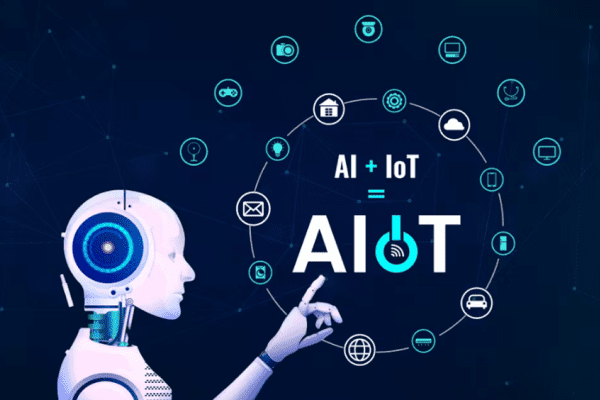
Objective: The Certified AIoT Engineer course is designed to equip professionals with the knowledge and skills to integrate Artificial Intelligence (AI) with Internet of Things (IoT) systems to create intelligent, connected solutions. The course covers IoT architecture, sensors, data acquisition, cloud platforms, AI algorithms, machine learning, predictive analytics, and real-time decision-making.
Duration: Three Month.
 How to Enroll and Get Certified in Your Chosen Course:
Step 1: Choose the course you wish to get certified in.
Step 2: Click on the “Enroll Now” button.
Step 3: Proceed with the enrollment process.
Step 4: Enter your billing details and continue to course fee payment.
Step 5: You will be redirected to the payment gateway. Pay the course and exam fee using one of the following methods:
Debit/Credit Card, Wallet, Paytm, Net Banking, UPI, or Google Pay.
Step 6: After successful payment, you will receive your study material login ID and password via email within 48 hours of fee payment.
Step 7: Once you complete the course, take the online examination.
Step 8: Upon passing the examination, you will receive:
• A soft copy (scanned) of your certificate via email within 7 days of examination.
• A hard copy (original with official seal and signature) sent to your address within 45 day of declaration of result.
Step 9: After certification, you will be offered job opportunities aligned with your area of interest.
Online Examination Detail:
Duration- 60 minutes.
No. of Questions- 30. (Multiple Choice Questions).
Maximum Marks- 100, Passing Marks- 40%.
There is no negative marking in this module.
| Marking System: | ||||||
| S.No. | No. of Questions | Marks Each Question | Total Marks | |||
| 1 | 10 | 5 | 50 | |||
| 2 | 5 | 4 | 20 | |||
| 3 | 5 | 3 | 15 | |||
| 4 | 5 | 2 | 10 | |||
| 5 | 5 | 1 | 5 | |||
| 30 | 100 | |||||
| How Students will be Graded: | ||||||
| S.No. | Marks | Grade | ||||
| 1 | 91-100 | O (Outstanding) | ||||
| 2 | 81-90 | A+ (Excellent) | ||||
| 3 | 71-80 | A (Very Good) | ||||
| 4 | 61-70 | B (Good) | ||||
| 5 | 51-60 | C (Average) | ||||
| 6 | 40-50 | P (Pass) | ||||
| 7 | 0-40 | F (Fail) | ||||
Key Benefits of Certification- Earning a professional certification not only validates your skills but also enhances your employability. Here are the major benefits you gain:
Practical, Job-Ready Skills – Our certifications are designed to equip you with real-world, hands-on skills that match current industry demands — helping you become employment-ready from day one.
Lifetime Validity – Your certification is valid for a lifetime — no renewals or expirations. It serves as a permanent proof of your skills and training.
Lifetime Certificate Verification – Employers and institutions can verify your certification anytime through a secure and reliable verification system — adding credibility to your qualifications.
Industry-Aligned Certification –All certifications are developed in consultation with industry experts to ensure that what you learn is current, relevant, and aligned with market needs.
Preferred by Employers – Candidates from ISO-certified institutes are often prioritized by recruiters due to their exposure to standardized, high-quality training.
Free Job Assistance Based on Your Career Interests – Receive personalized job assistance and career guidance in your preferred domain, helping you land the right role faster.
Assessment Modules:
Module 1 – AIoT Foundations & Ecosystem: Introduction to AIoT: combining AI and IoT, IoT architecture and components (sensors, actuators, connectivity), Fundamentals of Artificial Intelligence and Machine Learning, Edge vs cloud computing in AIoT, Business models and use‑cases of AIoT (smart homes, smart industry, healthcare), Technical and organisational challenges in AIoT deployments
Module 2 – IoT Hardware, Connectivity & Data Acquisition: Sensor and actuator technologies, embedded systems and microcontrollers for IoT, Communication protocols and standards (MQTT, CoAP, HTTP, LoRaWAN, NB‑IoT), Network topologies, gateways, edge devices and connectivity architectures, Data acquisition, filtering, pre‑processing on device/edge, Device management, firmware updates and life‑cycle management
Module 3 – Data Engineering & AI for IoT: Data ingestion and storage architectures for IoT (streams, batch, edge caching), Data modelling, cleaning and transformation for IoT telemetry and sensor data, Machine learning algorithms for IoT data (classification, regression, clustering, anomaly detection), Deep learning and reinforcement learning for edge/IoT environments, Real‑time analytics and streaming processing for IoT, AI model deployment on edge and resource‑constrained devices
Module 4 – AIoT System Design & Integration: Architecting AIoT systems: end‑to‑end design from device to cloud, Edge‑to‑cloud continuum and hybrid architectures, Integration of IoT platforms, AI/ML pipelines and application services, Security, privacy and identity management in AIoT systems, Interoperability, standardisation and APIs in AIoT ecosystems, Testing, simulation, validation and performance benchmarking of AIoT solutions
Module 5 – Deployment, Monitoring & Maintenance of AIoT Solutions: Deployment workflows: device provisioning, network setup, configuration management and CI/CD for IoT/AI pipelines, Monitoring, logging and observability of AIoT systems (device health, model performance, latency, data quality), Maintenance strategies: remote updates, model retraining, drift detection, lifecycle of sensors/devices, Scalability, fault‑tolerance and resilience in distributed AIoT deployments, Cost‑management, energy‑efficiency and edge resource optimisation
Module 6 – Use‑Cases, Governance, Ethics & Emerging Trends in AIoT: Industry vertical use‑cases: smart manufacturing (IIoT), smart cities, healthcare wearables, agriculture, transportation, Governance, regulation and ethical considerations in AIoT (data privacy, bias, autonomy, safety), Security threats specific to AIoT and mitigation strategies (device compromise, adversarial ML, network attacks), Future trends: digital twins, federated learning at edge, 5G/6G and IoT, IoT + AI for autonomous systems and robotics, Business strategy, innovation and scaling AIoT in enterprises
After successful completion of the Certificate in AIoT (AI + IoT) Engineer course, graduates can pursue cutting-edge careers at the intersection of Artificial Intelligence (AI) and Internet of Things (IoT). AIoT engineers build smart, connected systems that leverage AI to process IoT data for intelligent decision-making. Below is a detailed overview of career options with roles, responsibilities, and salary ranges in India.
1. AIoT Engineer
Role Overview:
Designs and develops intelligent IoT systems that collect, process, and analyze data using AI algorithms.
Key Responsibilities:
-
Develop IoT devices and sensor networks
-
Implement AI/ML models on IoT platforms
-
Ensure real-time data processing and analytics
-
Optimize edge and cloud AI deployments
Salary Range (India):
₹7 LPA – ₹16 LPA
(Senior engineers can earn ₹20 LPA+)
2. IoT Developer with AI Focus
Role Overview:
Builds IoT applications enhanced with AI capabilities for smart automation, predictive analytics, and monitoring.
Key Responsibilities:
-
Program IoT devices and gateways
-
Integrate AI models for anomaly detection, predictions, and automation
-
Maintain connectivity and data pipelines
-
Ensure device and data security
Salary Range (India):
₹6 LPA – ₹14 LPA
3. AIoT Solutions Architect
Role Overview:
Designs end-to-end AI-enabled IoT solutions for industries like manufacturing, smart cities, healthcare, and automotive.
Key Responsibilities:
-
Define architecture for AIoT systems
-
Integrate sensors, cloud, and edge computing
-
Ensure scalability, security, and performance
-
Lead development teams
Salary Range (India):
₹12 LPA – ₹25 LPA+
4. Edge AI Developer
Role Overview:
Implements AI models directly on edge devices for real-time decision-making and minimal latency.
Key Responsibilities:
-
Deploy AI on edge devices (gateways, microcontrollers)
-
Optimize AI inference for low-power devices
-
Ensure reliable real-time analytics
-
Monitor edge device performance
Salary Range (India):
₹8 LPA – ₹18 LPA
5. Smart Device / Embedded AI Engineer
Role Overview:
Develops intelligent embedded systems for AIoT applications such as smart homes, wearable devices, and industrial IoT.
Key Responsibilities:
-
Design firmware and embedded systems
-
Integrate AI for predictive maintenance, energy management, or automation
-
Ensure connectivity and low-power operation
-
Test and debug embedded AI solutions
Salary Range (India):
₹7 LPA – ₹16 LPA
6. IoT Data Analyst with AI Specialization
Role Overview:
Analyzes data from IoT devices using AI/ML techniques to generate actionable insights.
Key Responsibilities:
-
Collect and process IoT data streams
-
Build ML models for predictions and anomaly detection
-
Generate dashboards and reports
-
Optimize data collection and storage
Salary Range (India):
₹6 LPA – ₹13 LPA
7. AIoT DevOps Engineer
Role Overview:
Automates deployment, monitoring, and scaling of AI-enabled IoT solutions across cloud and edge platforms.
Key Responsibilities:
-
Implement CI/CD pipelines for AIoT applications
-
Manage device and cloud integration
-
Monitor performance, errors, and latency
-
Automate system updates and deployments
Salary Range (India):
₹7 LPA – ₹18 LPA
8. Industrial AIoT Engineer
Role Overview:
Builds AIoT solutions for manufacturing, supply chain, and industrial automation (Industry 4.0).
Key Responsibilities:
-
Deploy predictive maintenance solutions
-
Optimize production processes using AI analytics
-
Integrate sensors and robotics
-
Ensure system reliability and safety
Salary Range (India):
₹8 LPA – ₹20 LPA
9. AIoT Security Engineer
Role Overview:
Ensures the security and privacy of AIoT systems, protecting devices, data, and networks.
Key Responsibilities:
-
Implement secure communication protocols
-
Detect anomalies and cyber threats in IoT networks
-
Ensure compliance with security standards
-
Monitor devices and AI models for vulnerabilities
Salary Range (India):
₹8 LPA – ₹18 LPA
10. Freelance AIoT Consultant / Entrepreneur
Role Overview:
Designs and develops custom AIoT solutions or provides consulting services to enterprises and startups.
Key Responsibilities:
-
Develop AIoT applications for clients
-
Advise on system architecture and AI integration
-
Manage multiple client projects
-
Innovate smart solutions for real-world problems
Earning Potential (India):
₹10 LPA – ₹35 LPA+ (project-based)
Industries Hiring AIoT Engineers
-
Manufacturing and Industry 4.0
-
Smart cities and infrastructure projects
-
Healthcare and wearable technology
-
Automotive and connected vehicles
-
Energy, utilities, and logistics
-
Consumer electronics and home automation
Career Growth Outlook
-
Increasing adoption of AI-enabled IoT devices globally
-
Strong demand in smart cities, industrial automation, and healthcare
-
Opportunities for entrepreneurship and innovation
-
Clear path toward AIoT architect, R&D, and leadership roles
The Certificate in AIoT (AI + IoT) Engineer equips professionals to build intelligent, connected systems combining AI and IoT, offering high salary potential, cross-industry opportunities, and futuristic career relevance in India.
