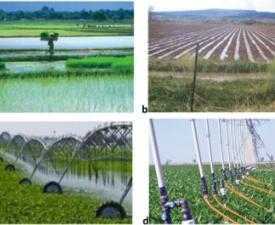
Description
Course Name: Certificate in Agriculture Water Management
Course Id: CAWM/Q1001.
Eligibility: 10th Grade (High School) or Equivalent.
Objective: A Certificate in Agriculture Water Management is a specialized program designed to provide individuals with the knowledge and skills to efficiently manage water resources in agricultural settings. The course focuses on irrigation techniques, water conservation methods, sustainable water use, and climate change adaptation strategies to ensure optimal crop production while minimizing water wastage.
Duration: Two Month.
 How to Enroll and Get Certified in Your Chosen Course:
 Step 1: Choose the course you wish to get certified in.
Step 2: Click on the “Enroll Now” button.
Step 3: Proceed with the enrollment process.
Step 4: Enter your billing details and continue to course fee payment.
Step 5: You will be redirected to the payment gateway. Pay the course and exam fee using one of the following methods:
Debit/Credit Card, Wallet, Paytm, Net Banking, UPI, or Google Pay.
Step 6: After successful payment, you will receive your study material login ID and password via email within 48 hours of fee payment.
Step 7: Once you complete the course, take the online examination.
Step 8: Upon passing the examination, you will receive:
• A soft copy (scanned) of your certificate via email within 7 days of examination.
• A hard copy (original with official seal and signature) sent to your address within 45 day of declaration of result.
Step 9: After certification, you will be offered job opportunities aligned with your area of interest.
Online Examination Detail:
Duration- 60 minutes.
No. of Questions- 30. (Multiple Choice Questions).
Maximum Marks- 100, Passing Marks- 40%.
There is no negative marking in this module.
| Marking System: | ||||||
| S.No. | No. of Questions | Marks Each Question | Total Marks | |||
| 1 | 10 | 5 | 50 | |||
| 2 | 5 | 4 | 20 | |||
| 3 | 5 | 3 | 15 | |||
| 4 | 5 | 2 | 10 | |||
| 5 | 5 | 1 | 5 | |||
| 30 | 100 | |||||
| How Students will be Graded: | ||||||
| S.No. | Marks | Grade | ||||
| 1 | 91-100 | O (Outstanding) | ||||
| 2 | 81-90 | A+ (Excellent) | ||||
| 3 | 71-80 | A (Very Good) | ||||
| 4 | 61-70 | B (Good) | ||||
| 5 | 51-60 | C (Average) | ||||
| 6 | 40-50 | P (Pass) | ||||
| 7 | 0-40 | F (Fail) | ||||
 Key Benefits of Certification- Earning a professional certification not only validates your skills but also enhances your employability. Here are the major benefits you gain:
 Practical, Job-Ready Skills – Our certifications are designed to equip you with real-world, hands-on skills that match current industry demands — helping you become employment-ready from day one.
 Lifetime Validity – Your certification is valid for a lifetime — no renewals or expirations. It serves as a permanent proof of your skills and training.
 Lifetime Certificate Verification – Employers and institutions can verify your certification anytime through a secure and reliable verification system — adding credibility to your qualifications.
 Industry-Aligned Certification –All certifications are developed in consultation with industry experts to ensure that what you learn is current, relevant, and aligned with market needs.
 Preferred by Employers – Candidates from ISO-certified institutes are often prioritized by recruiters due to their exposure to standardized, high-quality training.
 Free Job Assistance Based on Your Career Interests – Receive personalized job assistance and career guidance in your preferred domain, helping you land the right role faster.
Syllabus:
Introduction to Agriculture Water Management: Overview of agricultural water management, Importance of water in agriculture, Global water scarcity issues, Types of irrigation systems, The role of water in crop production, Water use efficiency in agriculture, Sustainable water management practices, Integrated water resources management (IWRM), Impact of climate change on agricultural water management, Case studies on water management in agriculture.
Water Resources and Availability: Sources of agricultural water, Surface water and groundwater, Rainwater harvesting techniques, Water storage systems in agriculture, Water cycle and its significance for farming, Groundwater recharge methods, Water availability and its regional variations, Assessing water availability for agriculture, Measuring and monitoring water resources, Case studies on water resource management.
Irrigation Systems and Technologies: Types of irrigation systems (drip, sprinkler, flood, furrow, etc.), Surface irrigation methods, Micro-irrigation technologies, Drip irrigation system design and management, Sprinkler irrigation system design, Subsurface irrigation systems, Irrigation scheduling and water management, Irrigation system maintenance and efficiency, Water use efficiency technologies, Case studies on the adoption of advanced irrigation systems.
Water Use Efficiency and Conservation: Concept of water use efficiency (WUE), Factors affecting water use efficiency in agriculture, Techniques for improving water use efficiency, Water conservation methods in farming, Crop selection and its impact on water usage, Rainwater harvesting and storage, Soil moisture management techniques, Efficient irrigation practices, Water-saving agricultural practices, Case studies on water use efficiency in farming.
Soil and Water Relationship: Understanding the soil-water-plant relationship, Soil types and their water holding capacity, Soil moisture retention techniques, Soil erosion and its impact on water management, Soil amendments for improving water retention, Role of organic matter in water conservation, Soil moisture sensors and monitoring, Irrigation management based on soil characteristics, The role of soil structure in water movement, Case studies on soil-water management.
Climate Change and Its Impact on Water Management: Impact of climate change on water availability for agriculture, Alterations in rainfall patterns and water supply, Strategies for adapting to climate change in agriculture, Climate-resilient irrigation systems, Mitigation practices for reducing water stress, Effects of temperature rise on crop water needs, Water resource management in drought conditions, Flood management and water control in agriculture, Climate change models and predictions for water resources, Case studies on climate adaptation in agriculture.
💧🌾 Career Scope After Certificate in Agriculture Water Management – India
The Certificate in Agriculture Water Management focuses on efficient use of water in farming through techniques like drip irrigation, canal systems, water conservation, groundwater recharge, watershed development, and rainwater harvesting. With rising water scarcity and the push for sustainable farming, this course equips graduates to work in both the government and private agricultural sectors.
✅ 1. Top Career Opportunities & Job Roles
| Job Role | Key Responsibilities |
|---|---|
| 💦 Irrigation Technician / Assistant | Implement and manage irrigation systems (drip, sprinkler, canal). |
| 🌿 Field Supervisor – Water Management | Monitor farm water usage and support farmers in optimal water application. |
| 📋 Watershed Development Assistant | Assist in planning and maintaining watershed projects in rural areas. |
| 🏞️ Rainwater Harvesting Technician | Design and maintain farm-level water harvesting structures. |
| 🧪 Soil and Water Testing Lab Assistant | Test water quality and soil moisture for agricultural use. |
| 🧑🏫 Agricultural Extension Worker | Educate farmers on water conservation and irrigation technologies. |
| 🧾 Micro-Irrigation System Installer / Supervisor | Install and monitor micro-irrigation systems in farms. |
| 🧑💻 GIS/Remote Sensing Assistant (Water Mapping) | Work with teams on mapping water bodies and irrigation plans. |
| 🛠️ Pump and Water Equipment Operator | Operate and maintain borewells, pumps, and pipelines. |
| 🚀 Entrepreneur (Irrigation Services or Farm Water Tech) | Start services in irrigation system installation, consulting, or supply. |
🏢 2. Industries & Organizations Hiring Graduates
-
Agriculture Departments (State & Central)
-
ICAR and KVKs (Krishi Vigyan Kendras)
-
Watershed Development Programs (IWMP, MGNREGA)
-
Irrigation Equipment Companies (Jain Irrigation, Netafim, etc.)
-
NGOs working in Rural Water and Agriculture Sectors
-
Water Resource Management Projects
-
Agritech Startups focused on precision farming
-
Rural Development Agencies and CSR Projects
-
World Bank/UNDP-funded water conservation projects
💰 3. Salary Range in India (2025 Estimates)
| Job Role | Monthly Salary (INR) |
|---|---|
| Irrigation Technician | ₹12,000 – ₹20,000 |
| Water Management Field Assistant | ₹15,000 – ₹25,000 |
| Micro-Irrigation Installer | ₹15,000 – ₹28,000 |
| Watershed Assistant | ₹18,000 – ₹30,000 |
| Soil & Water Testing Lab Assistant | ₹20,000 – ₹35,000 |
| NGO/Project Field Coordinator | ₹20,000 – ₹35,000 |
| GIS & Mapping Assistant | ₹25,000 – ₹40,000 |
| Entrepreneur (Irrigation/Water Service Business) | ₹25,000 – ₹1,00,000+ (profit-based) |