
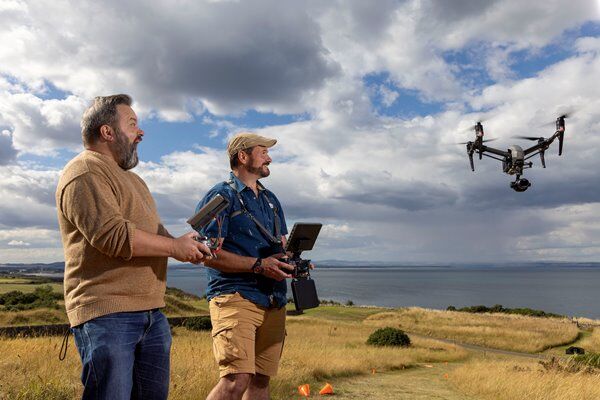
Description
Certification Name: Certificate in Drone Journalist /Aerial Filmmaker
Course Id: CDJAF/Q0001.
Eligibility: 10+2 (higher Secondary) or Equivalent.
Objective: The Certified Drone Journalist / Aerial Filmmaker course is designed to equip learners with the technical, creative, and regulatory skills needed to capture compelling aerial footage for journalism, filmmaking, and digital storytelling. The course covers drone operation, flight planning, aerial cinematography techniques, camera control, safety protocols, and legal compliance (including DGCA or FAA regulations, depending on the region). Learners will explore shot composition, movement dynamics, storytelling through aerial visuals, and integration with ground footage.
Duration: Three Month.
 How to Enroll and Get Certified in Your Chosen Course:
Step 1: Choose the course you wish to get certified in.
Step 2: Click on the “Enroll Now” button.
Step 3: Proceed with the enrollment process.
Step 4: Enter your billing details and continue to course fee payment.
Step 5: You will be redirected to the payment gateway. Pay the course and exam fee using one of the following methods:
Debit/Credit Card, Wallet, Paytm, Net Banking, UPI, or Google Pay.
Step 6: After successful payment, you will receive your study material login ID and password via email within 48 hours of fee payment.
Step 7: Once you complete the course, take the online examination.
Step 8: Upon passing the examination, you will receive:
• A soft copy (scanned) of your certificate via email within 7 days of examination.
• A hard copy (original with official seal and signature) sent to your address within 45 day of declaration of result.
Step 9: After certification, you will be offered job opportunities aligned with your area of interest.
Online Examination Detail:
Duration- 60 minutes.
No. of Questions- 30. (Multiple Choice Questions).
Maximum Marks- 100, Passing Marks- 40%.
There is no negative marking in this module.
| Marking System: | ||||||
| S.No. | No. of Questions | Marks Each Question | Total Marks | |||
| 1 | 10 | 5 | 50 | |||
| 2 | 5 | 4 | 20 | |||
| 3 | 5 | 3 | 15 | |||
| 4 | 5 | 2 | 10 | |||
| 5 | 5 | 1 | 5 | |||
| 30 | 100 | |||||
| How Students will be Graded: | ||||||
| S.No. | Marks | Grade | ||||
| 1 | 91-100 | O (Outstanding) | ||||
| 2 | 81-90 | A+ (Excellent) | ||||
| 3 | 71-80 | A (Very Good) | ||||
| 4 | 61-70 | B (Good) | ||||
| 5 | 51-60 | C (Average) | ||||
| 6 | 40-50 | P (Pass) | ||||
| 7 | 0-40 | F (Fail) | ||||
Key Benefits of Certification- Earning a professional certification not only validates your skills but also enhances your employability. Here are the major benefits you gain:
Practical, Job-Ready Skills – Our certifications are designed to equip you with real-world, hands-on skills that match current industry demands — helping you become employment-ready from day one.
Lifetime Validity – Your certification is valid for a lifetime — no renewals or expirations. It serves as a permanent proof of your skills and training.
Lifetime Certificate Verification – Employers and institutions can verify your certification anytime through a secure and reliable verification system — adding credibility to your qualifications.
Industry-Aligned Certification –All certifications are developed in consultation with industry experts to ensure that what you learn is current, relevant, and aligned with market needs.
Preferred by Employers – Candidates from ISO-certified institutes are often prioritized by recruiters due to their exposure to standardized, high-quality training.
Free Job Assistance Based on Your Career Interests – Receive personalized job assistance and career guidance in your preferred domain, helping you land the right role faster.
Assessment Modules:
Module 1: Introduction to Drone Journalism and Aerial Filmmaking: Understanding the role of drones in modern journalism and filmmaking, Types of drones used in media production and their components, Aerial storytelling: advantages, challenges, and use cases, Applications in news, documentaries, real estate, sports, and events, Ethical considerations in drone journalism, Overview of drone industry trends and emerging opportunities.
Module 2: Drone Operations, Safety, and Regulations: Basic aerodynamics and drone flight principles, Types of UAVs and drone classifications, Pre-flight planning, airspace classification, and no-fly zones, DGCA/FAA rules, licensing, insurance, and legal compliance, Safety protocols and emergency handling during drone flights, Drone registration, certification, and pilot logbook maintenance.
Module 3: Cinematography Techniques for Aerial Filming: Understanding framing, composition, and movement from aerial perspectives, Camera settings: resolution, frame rate, shutter speed, ISO, Using drones for cinematic shots (orbits, fly-throughs, reveals, top-downs), Shooting in different environments: urban, rural, water, mountains, Creating dramatic storytelling using elevation and motion, Matching aerial footage with ground-based footage in post-production.
Module 4: Equipment, Accessories, and Drone Maintenance: Choosing the right drone and gimbal setup for video and photography, Understanding flight controllers, GPS, sensors, and stabilization, Using ND filters, propeller guards, extra batteries, and monitors, Drone maintenance: battery care, motor checks, firmware updates, Troubleshooting flight issues and environmental hazards, Packing and transporting drones for field assignments.
Module 5: Post-Production for Aerial Media: Importing and organizing aerial footage, Stabilizing and color grading drone shots, Editing drone footage using software like Premiere Pro, Final Cut, DaVinci Resolve, Removing lens distortion and enhancing clarity, Integrating aerial visuals with voiceover, sound effects, and music, Exporting in correct formats for web, TV, OTT, and social media.
Module 6: Project Execution and Career Development: Planning a drone-based journalism or filmmaking assignment, Working with newsrooms, media houses, and creative studios, Building a drone footage reel and project portfolio, Writing aerial shot lists and scripting for visual storytelling, Legal and ethical case studies in drone journalism and filmmaking, Freelancing, client pitching, and monetization avenues for drone media experts.
🎓 Career Opportunities After Certificate in Drone Journalist / Aerial Filmmaker
A Certificate in Drone Journalist / Aerial Filmmaker prepares professionals to capture high-quality aerial footage for news, films, documentaries, advertisements, and digital media using drones. The course develops skills in drone operation, aerial cinematography, camera handling, shot composition, flight planning, safety regulations, post-production editing, and storytelling from an aerial perspective.
With the rise of digital media, OTT platforms, independent filmmaking, real estate, and corporate video production in India, skilled drone journalists and aerial filmmakers are in demand for both full-time and freelance roles.
1️⃣ Drone Journalist / Aerial Reporter
Key Responsibilities:
Capture aerial footage for news reports, documentaries, and events; integrate aerial visuals with storytelling; follow safety and legal drone regulations.
Salary in India:
₹3 – ₹7 LPA (Entry Level)
₹8 – ₹15 LPA (Experienced Level)
2️⃣ Aerial Videographer / Cinematographer
Key Responsibilities:
Plan and shoot aerial sequences for films, advertisements, corporate videos, real estate, and digital media; select appropriate camera settings, angles, and movements.
Salary in India:
₹4 – ₹9 LPA (Entry Level)
₹10 – ₹20 LPA (Experienced Level)
3️⃣ Drone Camera Operator
Key Responsibilities:
Operate drones safely, follow flight plans, manage camera settings, capture precise shots, and assist directors and cinematographers during shoots.
Salary in India:
₹3 – ₹6 LPA (Entry Level)
₹7 – ₹15 LPA (Experienced Level)
4️⃣ Post-Production & Editing Specialist
Key Responsibilities:
Edit and enhance aerial footage, apply color grading, stabilize shots, integrate drone visuals with other footage, and deliver final output suitable for broadcast or digital platforms.
Salary in India:
₹3 – ₹7 LPA (Entry Level)
₹8 – ₹15 LPA (Experienced Level)
5️⃣ Freelance Drone Journalist / Aerial Filmmaker
Key Responsibilities:
Work independently on projects for media houses, corporate videos, advertising campaigns, social media content, and film productions; manage planning, shooting, and editing of aerial footage.
Earning Potential in India:
₹30,000 – ₹3,00,000+ per month depending on project scale, experience, and portfolio.
📈 Career Growth Path
Drone Camera Operator → Aerial Videographer → Drone Journalist / Cinematographer → Senior Aerial Filmmaker → Independent Filmmaker / Production House Owner
With advanced skills in cinematic aerial cinematography, drone fleet management, storytelling, and post-production integration, professionals can reach ₹15 – ₹35 LPA within 5–8 years in top media, film, and corporate production houses.
🎓 Industries Hiring
-
Television News Channels
-
Film & OTT Production Houses
-
Digital Media & Content Studios
-
Advertising & Corporate Video Agencies
-
Real Estate & Architecture Media Firms
-
Event Management & Aerial Coverage Companies
-
Freelance / Independent Projects
