Description
Certification Name: Certificate in Chemical Fire Safety Specialist
Course Id: CCFSS/Q0001.
Eligibility: 10+2 or Equivalent.
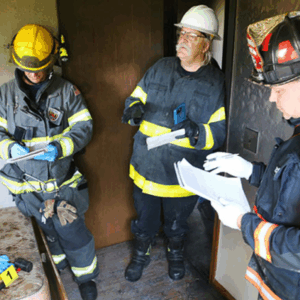
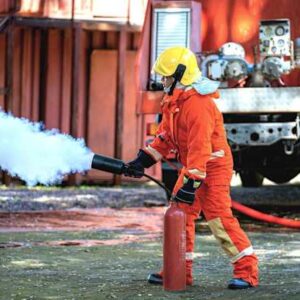
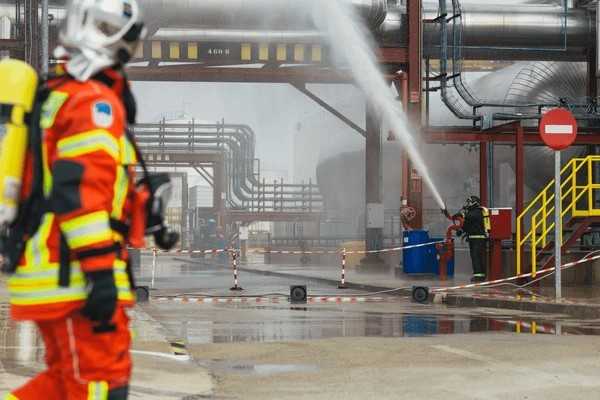
Objective: The Certified Chemical Fire Safety Specialist course is designed to equip students with specialized knowledge and practical skills in preventing, managing, and responding to fires involving chemical substances. The program covers chemical fire dynamics, hazardous material identification, storage and handling protocols, fire detection and suppression systems, risk assessment, emergency response planning, and regulatory compliance.
Duration: Three Month.
 How to Enroll and Get Certified in Your Chosen Course:
 Step 1: Choose the course you wish to get certified in.
Step 2: Click on the “Enroll Now” button.
Step 3: Proceed with the enrollment process.
Step 4: Enter your billing details and continue to course fee payment.
Step 5: You will be redirected to the payment gateway. Pay the course and exam fee using one of the following methods:
Debit/Credit Card, Wallet, Paytm, Net Banking, UPI, or Google Pay.
Step 6: After successful payment, you will receive your study material login ID and password via email within 48 hours of fee payment.
Step 7: Once you complete the course, take the online examination.
Step 8: Upon passing the examination, you will receive:
• A soft copy (scanned) of your certificate via email within 7 days of examination.
• A hard copy (original with official seal and signature) sent to your address within 45 day of declaration of result.
Step 9: After certification, you will be offered job opportunities aligned with your area of interest.
Online Examination Detail:
Duration- 60 minutes.
No. of Questions- 30. (Multiple Choice Questions).
Maximum Marks- 100, Passing Marks- 40%.
There is no negative marking in this module.
| Marking System: | ||||||
| S.No. | No. of Questions | Marks Each Question | Total Marks | |||
| 1 | 10 | 5 | 50 | |||
| 2 | 5 | 4 | 20 | |||
| 3 | 5 | 3 | 15 | |||
| 4 | 5 | 2 | 10 | |||
| 5 | 5 | 1 | 5 | |||
| 30 | 100 | |||||
| How Students will be Graded: | ||||||
| S.No. | Marks | Grade | ||||
| 1 | 91-100 | O (Outstanding) | ||||
| 2 | 81-90 | A+ (Excellent) | ||||
| 3 | 71-80 | A (Very Good) | ||||
| 4 | 61-70 | B (Good) | ||||
| 5 | 51-60 | C (Average) | ||||
| 6 | 40-50 | P (Pass) | ||||
| 7 | 0-40 | F (Fail) | ||||
 Key Benefits of Certification- Earning a professional certification not only validates your skills but also enhances your employability. Here are the major benefits you gain:
 Practical, Job-Ready Skills – Our certifications are designed to equip you with real-world, hands-on skills that match current industry demands — helping you become employment-ready from day one.
 Lifetime Validity – Your certification is valid for a lifetime — no renewals or expirations. It serves as a permanent proof of your skills and training.
 Lifetime Certificate Verification – Employers and institutions can verify your certification anytime through a secure and reliable verification system — adding credibility to your qualifications.
 Industry-Aligned Certification –All certifications are developed in consultation with industry experts to ensure that what you learn is current, relevant, and aligned with market needs.
 Preferred by Employers – Candidates from ISO-certified institutes are often prioritized by recruiters due to their exposure to standardized, high-quality training.
 Free Job Assistance Based on Your Career Interests – Receive personalized job assistance and career guidance in your preferred domain, helping you land the right role faster.
Assessment Modules:
Module 1: Introduction to Chemical Fire Safety: Overview of Chemical Fire Safety, Role of a Chemical Fire Safety Specialist, Key Terminology and Concepts, Importance of Fire Safety in Chemical Environments, Ethical and Professional Considerations, Regulatory Framework Overview
Module 2: Chemistry of Fire and Combustion: Combustion Principles and Reactions, Flammable and Combustible Chemicals, Chemical Reaction Hazards, Heat Release and Flame Propagation, Toxic Gas Production in Fires, Application of Chemistry in Fire Prevention
Module 3: Fire Prevention and Risk Assessment: Identifying Chemical Fire Hazards, Fire Risk Assessment Techniques, Safety Data Sheets (SDS) Analysis, Storage and Handling of Hazardous Chemicals, Preventive Measures and Controls, Monitoring and Inspection Protocols
Module 4: Fire Detection and Suppression Systems: Chemical Fire Detection Methods, Fire Alarm and Sensor Technologies, Fire Suppression Systems for Chemical Hazards, Use of Extinguishing Agents for Different Chemicals, Safety Equipment and PPE, Maintenance and Compliance Standards
Module 5: Emergency Response and Management: Chemical Fire Response Procedures, Evacuation Planning and Execution, Firefighting Techniques in Chemical Environments, Hazard Containment and Spill Control, Incident Command and Coordination, Post-Incident Investigation and Reporting
Module 6: Professional Practice and Compliance: Fire Safety Codes and Chemical Regulations, Risk Management and Liability Considerations, Training and Educating Staff on Chemical Fire Safety, Documentation and Reporting, Developing Safety Policies and SOPs, Career Development and Continuing Education
Career Opportunities After Certificate in Chemical Fire Safety Specialist
After successful completion of the Certificate in Chemical Fire Safety Specialist, graduates can work in chemical plants, industrial facilities, research labs, oil and gas sectors, manufacturing units, corporate safety departments, and fire safety consulting firms. The program equips learners with expertise in chemical fire prevention, hazard management, emergency response, and compliance with Indian fire safety regulations.
1. Chemical Fire Safety Officer
Role: Implements fire safety protocols in chemical and industrial facilities, manages hazardous material handling, and ensures compliance with safety regulations.
Salary Range (India): ₹4 – 7 LPA (Entry Level); ₹9 – 18 LPA (Experienced)
2. Industrial Safety Manager – Chemical Sector
Role: Oversees safety operations in chemical plants, including fire prevention, risk assessment, and emergency preparedness.
Salary Range: ₹4.5 – 8 LPA (Entry Level); ₹10 – 20 LPA (Experienced)
3. Fire & Hazard Compliance Officer
Role: Conducts safety audits, monitors chemical storage and handling, and ensures adherence to regulatory standards.
Salary Range: ₹4 – 7.5 LPA (Entry Level); ₹9 – 18 LPA (Experienced)
4. Fire Safety Training & Simulation Specialist – Chemicals
Role: Conducts specialized fire drills, simulations, and staff training focused on chemical hazards and emergency response.
Salary Range: ₹4 – 7.5 LPA (Entry Level); ₹9 – 18 LPA (Experienced)
5. Emergency Response & Hazard Control Coordinator
Role: Designs and implements emergency response plans, chemical spill management, and evacuation procedures.
Salary Range: ₹5 – 9 LPA (Entry Level); ₹12 – 22 LPA (Experienced)
6. Process Safety & Fire Risk Consultant
Role: Provides consultancy on chemical process safety, fire hazard assessments, and compliance planning for industrial clients.
Income Potential: ₹10 – 35 LPA+ (Consulting / Freelance)
7. Chemical Plant Fire Safety Supervisor
Role: Supervises fire safety systems, safety drills, and emergency procedures within chemical plants or industrial units.
Salary Range: ₹4 – 7 LPA (Entry Level); ₹8 – 16 LPA (Experienced)
8. Research & Laboratory Safety Officer
Role: Manages chemical safety protocols, fire prevention measures, and training in laboratory and research environments.
Salary Range: ₹3.5 – 6.5 LPA (Entry Level); ₹7 – 14 LPA (Experienced)
9. Government / Public Sector Chemical Safety Officer
Role: Supports regulatory compliance, fire safety inspections, and chemical hazard management in public institutions or government projects.
Salary Range: ₹4 – 7 LPA (Entry Level); ₹8 – 16 LPA (Experienced)
10. Independent Chemical Fire Safety Consultant
Role: Offers consultancy, hazard analysis, fire prevention planning, and training for chemical industries, labs, and educational institutions.
Income Potential: ₹12 – 40 LPA+ (Consulting / Freelance)
Career Progression
With 4–8 years of experience, professionals can advance to roles such as Senior Chemical Fire Safety Manager, Industrial Safety Head, Emergency Response Director, or Entrepreneur in Chemical Fire Safety Consultancy, earning ₹15 – 45 LPA+ depending on expertise and scale of operations.
Key Highlights
• High demand in chemical, industrial, manufacturing, and research sectors
• Opportunities across training, auditing, emergency management, and consulting
• Career focuses on safety, hazard prevention, and regulatory compliance
• Potential for private consultancy and entrepreneurship for substantial income growth